











SSD wholesale pricing depends on more than storage capacity. For distributors, PC builders, system integrators, and OEM buyers, the final cost can also be affected by NAND flash, controller configuration, performance requirements, testing, order quantity, customization, and shipping terms.
Understanding these factors helps buyers compare supplier quotations more accurately and avoid choosing a product based on unit price alone. This guide explains what influences bulk SSD costs, which details to confirm before placing an order, and how to make supplier quotations easier to compare.
Quick Answer: SSD wholesale pricing is mainly determined by capacity, interface, NAND and controller configuration, performance targets, order volume, testing requirements, customization, and delivery terms. To compare quotes fairly, confirm that each supplier is quoting the same specifications and commercial conditions.
1. SSD Capacity, Form Factor, and Interface
Capacity is one of the first factors buyers consider when requesting an SSD quotation. However, two SSDs with the same capacity may have different prices because they use different interfaces, form factors, and hardware configurations.
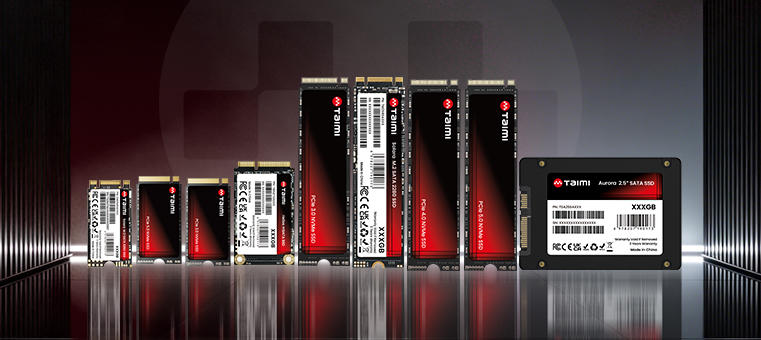
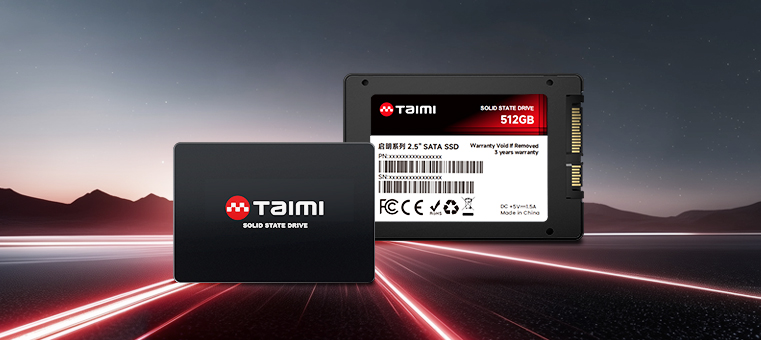
Common options include 2.5-inch SATA SSDs, M.2 SATA SSDs, and M.2 NVMe SSDs. Their specifications and intended applications differ, so buyers should define the required product type before comparing prices.
| SSD Type | Typical Characteristics | What Buyers Should Confirm |
|---|---|---|
| 2.5-inch SATA SSD | Designed for SATA-compatible desktop and laptop systems. | Capacity, SATA interface, performance specifications, and enclosure requirements. |
| M.2 SATA SSD | Uses the M.2 form factor with the SATA protocol. | Module dimensions, connector compatibility, and SATA support on the target system. |
| M.2 NVMe SSD | Uses NVMe over PCIe and is available in different PCIe generations. | PCIe generation, supported dimensions, performance targets, and thermal requirements. |
When requesting a quote, specify the capacity, form factor, interface, and performance target together. This reduces the chance of comparing prices for products that are not technically equivalent.
2. NAND Flash, Controller, and DRAM Configuration
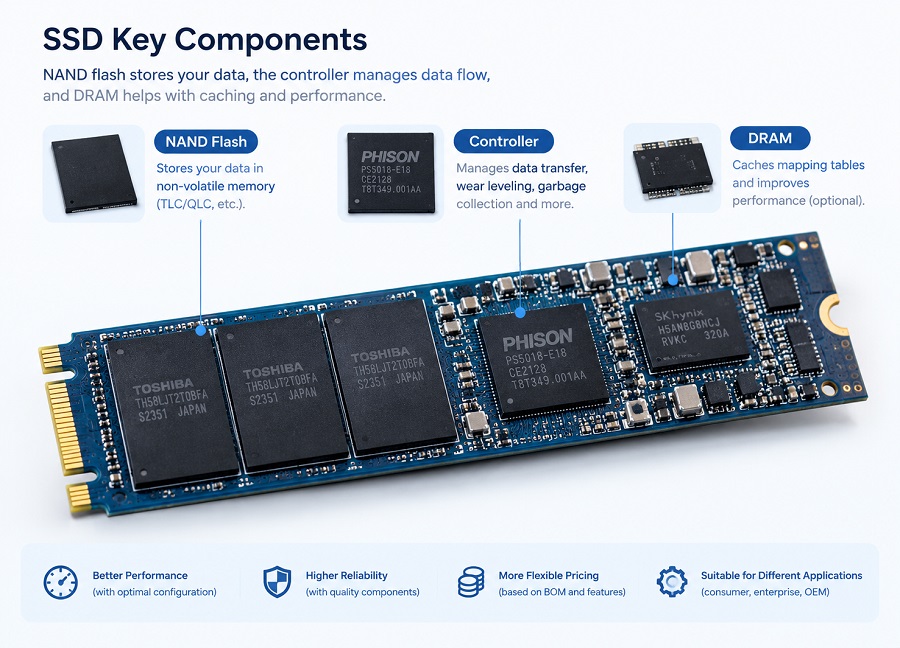
The components inside an SSD can affect its cost, performance, and behavior under different workloads.
- NAND flash: Flash type, density, configuration, and availability can influence the overall bill of materials.
- Controller: The controller affects compatibility, firmware features, and supported performance characteristics.
- DRAM: Some SSD designs include dedicated DRAM, while others use different architectures. The appropriate design depends on the product requirements.
- Firmware: Firmware configuration and validation requirements can matter for OEM projects and specific host-system environments.
A lower quotation does not automatically indicate a worse product, just as a higher quotation does not guarantee better performance. Buyers should compare the actual configuration and supporting specifications instead of relying on component labels or price alone.
3. Locked BOM and Component Consistency
For bulk purchasing and OEM projects, buyers may need a consistent bill of materials (BOM) across production batches. This is particularly relevant when an SSD has already been validated for compatibility with a specific computer, motherboard, or embedded system.
A quotation should clarify which components and specifications are agreed upon, whether substitutions are permitted, and how changes will be communicated and approved.
Factory Insight: Confirm BOM Requirements Before Mass Production
If your project requires a fixed configuration, clarify the relevant controller, NAND configuration, firmware requirements, and any other critical components before production begins.
Also establish how proposed component substitutions will be reviewed. Changes to a validated configuration may require compatibility checks or additional testing, depending on the application.
For a checklist of commercial and technical details to confirm, see What Should Be Included in an SSD Order Confirmation? Verify the destination URL in your CMS before publishing.
4. Performance Targets and Testing Requirements
Different projects require different levels of SSD performance and validation. A standard storage upgrade may have different requirements from a system integrator's deployment or an OEM project that must pass specific compatibility tests.
Before comparing quotations, confirm the performance specifications and testing scope that each supplier includes.
| Item | Questions to Ask |
|---|---|
| Performance | What read/write speeds and other performance specifications are quoted? Under what test conditions? |
| Functional testing | Which functional tests are included in the standard production process? |
| Compatibility validation | Is additional validation required for the buyer's system or application? |
| Warranty | What warranty period and conditions apply to the quoted product? |
Additional testing or application-specific validation may affect project costs and schedules. Ask suppliers to distinguish standard production testing from any extra work requested for your project.
5. Production Volume and Setup Costs
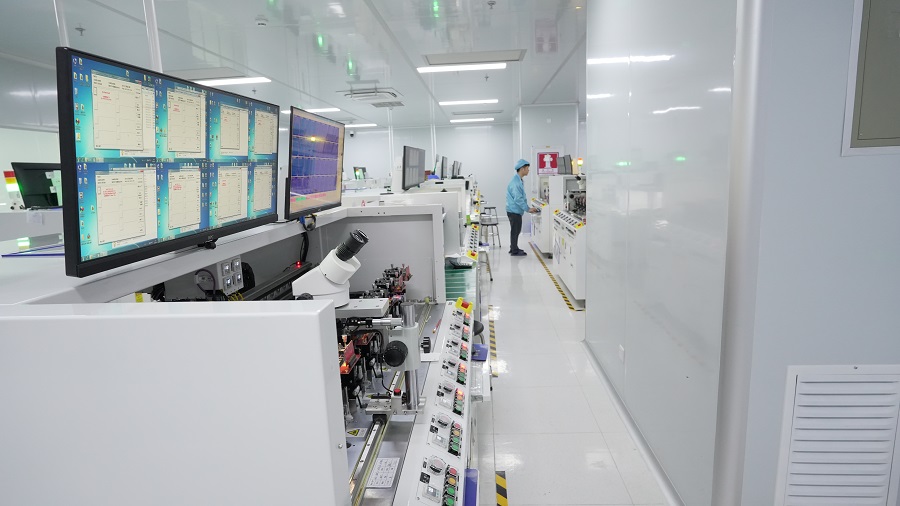
Order quantity can influence the quoted unit price. Some production, setup, packaging, and administrative costs may be distributed across a larger number of units, depending on the product and manufacturing process.
However, there is no universal discount that applies to every SSD order. The actual pricing structure depends on the configuration, component availability, production requirements, and supplier terms.
For customized orders, clarify whether the quotation includes packaging design, labeling, firmware configuration, or other project-specific requirements. If these items are charged separately, request an itemized breakdown.
6. How Order Quantity Can Affect SSD Wholesale Pricing
Suppliers may quote different terms for samples, initial orders, bulk production, and repeat purchases. The following table describes common purchasing stages; actual minimum order quantities and price breaks vary by supplier and product.
| Order Stage | Main Purpose | What to Confirm |
|---|---|---|
| Samples | Evaluate specifications, compatibility, and performance. | Sample price, shipping, and testing arrangements. |
| Initial batch | Confirm the product and purchasing process before scaling up. | Minimum order quantity, specifications, and delivery schedule. |
| Bulk production | Supply a larger volume for distribution, integration, or OEM use. | Volume pricing, BOM requirements, testing, packaging, and shipment terms. |
| Repeat orders | Maintain supply for ongoing demand. | Price validity, component changes, forecast, and replenishment lead time. |
Buyers planning recurring orders should also discuss how quotations are updated when component costs or availability change. This can help both parties plan purchasing and inventory more effectively.
7. Shipping Terms and Total Landed Cost
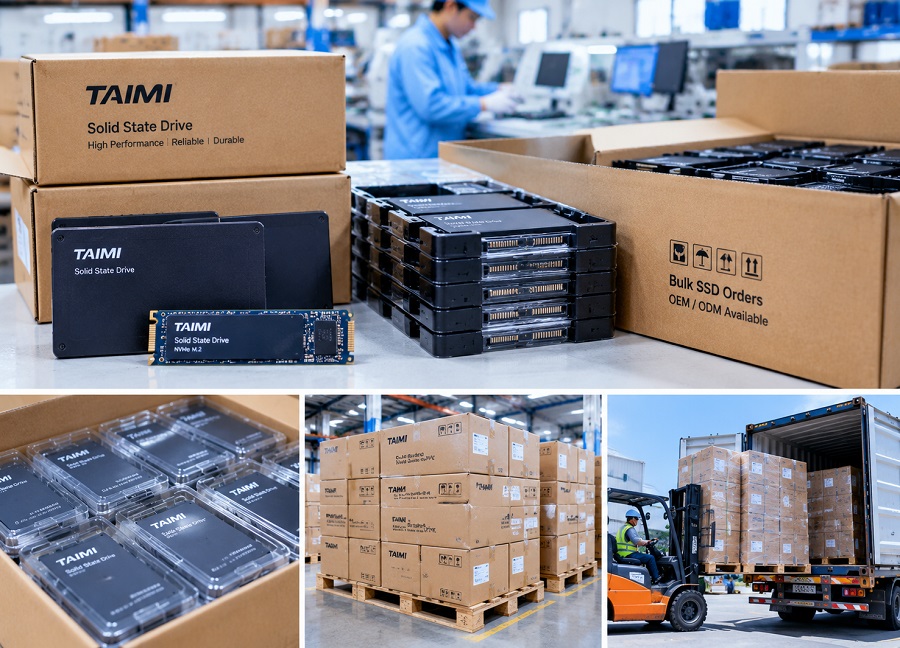
The unit price is only one part of the total purchasing cost. Shipping arrangements, insurance, customs clearance, import duties, taxes, and local delivery may also affect the buyer's final cost, depending on the agreed Incoterm and destination.
| Shipping Term | General Consideration |
|---|---|
| EXW | The buyer generally takes responsibility for arranging collection and subsequent transportation, subject to the agreed delivery point and contract. |
| FOB | For applicable sea or inland-waterway shipments, the seller delivers the goods on board the vessel at the named port; responsibilities then transfer under the agreed term. |
| DDP | The seller generally arranges delivery to the named destination and handles import clearance and applicable duties and taxes, as specified by the agreed term. |
These terms have specific contractual meanings. Confirm the named place, applicable Incoterms edition, and responsibilities for customs, taxes, insurance, and unloading rather than assuming that a term covers every possible charge.
Cost Comparison Tip: Compare the same delivery basis across quotations. If one price excludes freight and import charges while another includes them, the unit prices alone will not show which option has the lower total cost.
8. Why Two SSDs with the Same Capacity Can Have Different Prices
Capacity is important, but it does not fully define an SSD. Products with the same advertised capacity may differ in interface, NAND and controller configuration, performance, firmware, testing scope, warranty, and customization.
| Comparison Factor | Why It Matters |
|---|---|
| Interface and form factor | Different interfaces and physical designs serve different systems and performance requirements. |
| Component configuration | NAND, controller, DRAM design, and firmware requirements can differ. |
| Testing and validation | Standard production testing and additional project-specific validation may have different costs. |
| Customization | Custom labels, packaging, firmware, or other requirements may change the quote. |
| Commercial terms | Warranty, payment terms, delivery conditions, and included services affect the overall offer. |
When comparing suppliers, use a common specification sheet and ask each supplier to identify any differences or exclusions in the quotation.
9. What Should Be Included in an SSD Wholesale Quote?
A useful quotation should provide enough information for your purchasing and technical teams to understand exactly what is being offered.
| Quotation Item | Details to Confirm |
|---|---|
| Product specifications | Capacity, form factor, interface, and performance targets. |
| Component configuration | Agreed NAND, controller, DRAM design, firmware, and BOM requirements where applicable. |
| Quantity and pricing | Quoted quantity, unit price, price tiers, currency, and quotation validity. |
| Testing and warranty | Included tests, any additional validation costs, and warranty conditions. |
| Packaging and delivery | Packaging, labeling, production lead time, shipping term, destination, and payment conditions. |
For more guidance on evaluating potential suppliers, read How to Evaluate an SSD Supplier: A Checklist for Bulk Buyers. Confirm that the URL and article title match your CMS before publishing.
10. How to Compare Bulk SSD Quotes Fairly
Before selecting a supplier, make sure the quotations cover the same product and purchasing conditions. A simple comparison process can help identify differences that might otherwise be overlooked.
- Standardize the specifications. Use the same capacity, interface, form factor, and performance requirements for each supplier.
- Confirm the configuration. Document critical BOM requirements and the process for approving substitutions.
- Check the testing scope. Separate standard production testing from additional validation requested for your application.
- Review commercial terms. Compare MOQ, quoted volume, payment terms, warranty, and quotation validity.
- Calculate the delivered cost. Include applicable freight, duties, taxes, and other charges not already included in the quotation.
- Clarify supply arrangements. For recurring orders, discuss production lead time, component changes, and replenishment planning.
If you are sourcing from China, you may also find this guide useful: How to Choose an SSD Supplier in China: A Practical Buyer's Guide. Verify the URL in your CMS before publishing.
11. Information to Prepare Before Requesting a Quote
Providing clear requirements helps suppliers prepare a quotation that is relevant to your project. Before contacting an SSD manufacturer, prepare the following details where possible:
- SSD type, such as 2.5-inch SATA, M.2 SATA, or M.2 NVMe.
- Required capacity and interface or PCIe generation.
- Performance targets and intended application.
- Estimated order quantity and expected purchasing frequency.
- Any critical BOM, firmware, or compatibility requirements.
- Packaging, labeling, or other OEM customization needs.
- Required testing, warranty expectations, and delivery destination.
- Preferred shipping term and target delivery schedule.
You do not need to have every technical detail finalized before making an initial inquiry. However, the more clearly you define the essential requirements, the easier it is to compare quotations on a like-for-like basis.
Request a Bulk SSD Quote from Taimi
Taimi focuses on consumer-grade SSD products and supports bulk purchasing requirements for distributors, PC builders, system integrators, and OEM projects.
Share your preferred SSD type, capacity, interface, estimated order quantity, and any specific customization or testing requirements. If your project requires component consistency, please indicate which specifications need to remain fixed.
Looking for an SSD manufacturing partner for your next bulk order?
Request a Bulk SSD QuoteFrequently Asked Questions
What is SSD wholesale pricing?
SSD wholesale pricing is the unit price quoted for SSD purchases intended for resale, system integration, or OEM projects. It depends on hardware specifications, component configuration, order quantity, testing requirements, customization, and commercial terms.
Does buying SSDs in bulk reduce the unit price?
Bulk orders may reduce the unit price by spreading certain setup, production, and logistics costs across more units. Actual pricing depends on the product configuration, order quantity, component availability, and supplier terms.
Why do SSD wholesale quotes vary between suppliers?
Quotes may differ because of NAND flash configuration, controller and DRAM design, performance requirements, BOM agreements, testing scope, warranty conditions, customization, and shipping terms.
What information should I provide to get an SSD bulk quotation?
Provide the required SSD type, capacity, interface, performance targets, order quantity, component requirements, customization needs, testing requirements, and delivery destination.