
Company Introduction
More















SSD TBW Explained: What It Means and How It Affects SSD Lifespan
Share:
When evaluating an SSD, many users first look at capacity, read/write speed, and TBW.
A higher TBW rating can indicate stronger write endurance, but it does not tell the complete story of SSD lifespan.
From an SSD engineering perspective, TBW is only one measurement used to understand endurance. During SSD development and validation, engineers evaluate how different components work together under real operating conditions.
A common question many users ask is:
Does a higher TBW rating always mean an SSD will last longer?
The answer depends on many factors, including NAND flash quality, controller behavior, firmware optimization, workload patterns, and manufacturing consistency.
In real SSD testing, reliability is usually determined by many small details rather than a single specification on a datasheet.
What Does TBW Mean on an SSD?
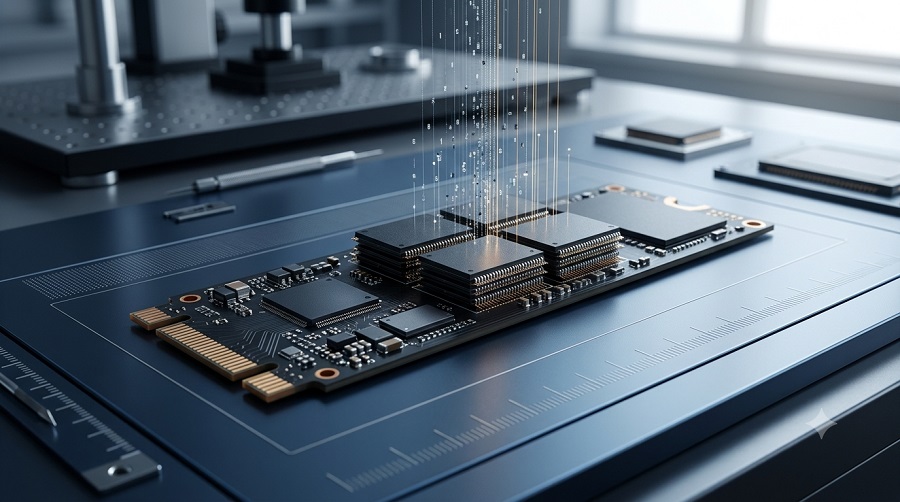
TBW stands for Terabytes Written.
It represents the total amount of data an SSD is designed to handle during its rated endurance period.
For example:
A 1TB SSD with a rating of 600 TBW is designed to support approximately 600 terabytes of written data under defined testing conditions.
However, TBW should not be treated as a countdown timer.
An SSD does not automatically stop working when it reaches its rated TBW value. Instead, TBW is an endurance measurement used to estimate how much write activity a drive can handle during its expected service life.
In real-world applications, many SSDs can continue operating beyond their official TBW rating depending on workload conditions, operating environment, and overall drive health.
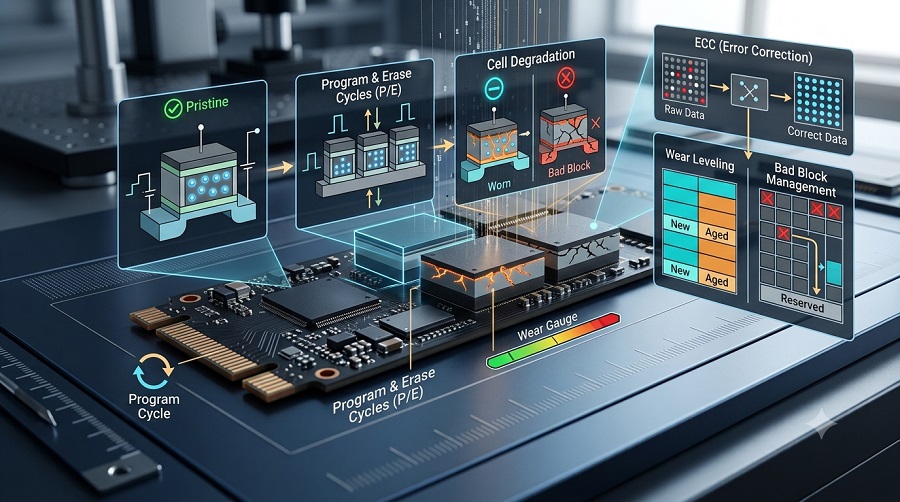
Why TBW Does Not Tell the Whole SSD Lifespan Story
One common misunderstanding is that TBW alone determines SSD lifespan.
In reality, SSD endurance depends on the interaction between multiple components.
During endurance testing, engineers often observe differences between SSDs that appear identical on paper.
They may have:
- The same capacity
- The same interface
- Similar read/write speeds
- Similar TBW ratings
However, after continuous workloads, differences can appear.
The reason is simple: an SSD is not only a NAND flash storage device.
NAND flash stores data, the controller manages data movement, firmware controls internal operations, and manufacturing consistency affects how each drive performs over time.
Long-term SSD reliability is built through the interaction between these components.
A difference in NAND quality, firmware tuning, thermal control, or manufacturing consistency may not be visible during a short benchmark, but it can become noticeable after months or years of operation.
This is why SSD evaluation requires more than checking specifications. Engineers need to understand how the drive behaves over time.
How NAND Flash Wear Affects SSD Endurance
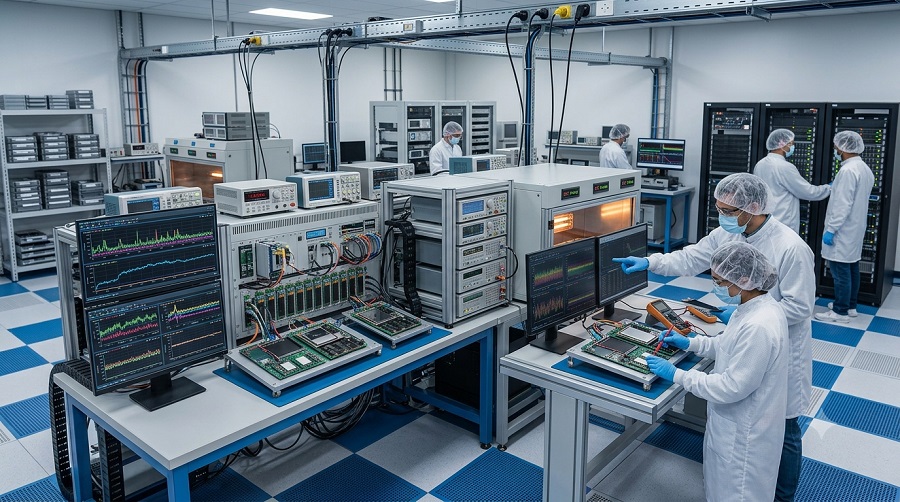
The foundation of SSD endurance is NAND flash technology.
Different NAND types, such as TLC and QLC NAND, can affect endurance, write performance, and long-term SSD behavior.
Each program and erase cycle creates a small amount of physical wear on these cells.
Over time, NAND wear can affect:
- Data retention capability
- Error correction requirements
- Available spare blocks
- Remaining endurance
This is a normal characteristic of flash storage.
The goal of SSD engineering is not to completely eliminate NAND wear. Instead, engineers design systems that manage this wear efficiently throughout the drive’s lifetime.
Technologies such as:
- Wear leveling
- Error Correction Code (ECC)
- Garbage collection
- Bad block management
help maintain stable performance as the SSD ages.
Engineering Deep Dive:These longevity features don't happen automatically—they are actively executed by the SSD controller. To understand how controller algorithms manage flash wear, dynamic wear-leveling, and garbage collection to extend real-world TBW, read our detailed guide: How SSD Controllers Work: Speed, Thermal & Lifespan.
How SSD Engineers Evaluate Long-Term Reliability
A benchmark result only shows one moment of an SSD’s performance. Understanding PCIe 4.0 and PCIe 3.0 performance differences can also help explain why SSDs with different architectures may deliver different performance results under real workloads.
During SSD validation, engineers look beyond peak numbers and focus on stability under different workloads.
A short performance test can show maximum speed, but extended testing provides more information about:
- Write consistency
- Temperature changes
- Firmware behavior
- Error handling
- Performance stability
This is especially important for heavy workloads, where sustained write performance can differ significantly from peak benchmark results.
In practical validation, engineers may run continuous workloads for extended periods to observe how the SSD responds under sustained pressure.
A drive may perform well during a quick benchmark, but long-duration testing can reveal issues related to thermal throttling, write amplification, or firmware management.
For this reason, reliability testing is not only about measuring speed. It is about understanding how the SSD behaves throughout its usable life.
How Is SSD TBW Calculated?
SSD TBW is influenced by more than NAND endurance.
Engineers consider factors including:
- NAND flash characteristics
- SSD capacity
- Write amplification
- Over-provisioning
- Controller algorithms
A larger SSD usually contains more NAND cells, allowing write operations to be distributed across more memory blocks.
This is one reason higher-capacity SSDs often have higher TBW ratings.
Example TBW Range
| SSD Capacity | Typical TBW Range |
|---|---|
| 500GB SSD | Around 150–600 TBW |
| 1TB SSD | Around 300–1200 TBW |
| 2TB SSD | Around 600–2400 TBW |
Actual TBW values depend on SSD design, NAND type, controller technology, and manufacturer validation standards.
Architecture & Endurance Note: Beyond raw NAND cell limitations, the drive's internal cache design directly impacts how efficiently the controller handles Flash Translation Layer (FTL) updates and wear-leveling operations. To explore how dedicated onboard DRAM and Host Memory Buffer (HMB) architectures manage background data movement to optimize efficiency and sustained performance, check out our engineering analysis:
How Long Does an SSD Usually Last?
Many users ask:
How many years can an SSD last?
The answer depends mainly on workload.
An office computer used for:
- Web browsing
- Documents
- General applications
usually creates relatively low write activity.
A workstation used for:
- Video editing
- Large data processing
- Professional applications
may generate much higher write workloads.
For most consumer users, SSD endurance is usually not the limiting factor.
Other factors often have a greater impact, including:
- Product quality
- Operating environment
- Workload intensity
- Thermal conditions
- Proper maintenance
SSD Lifespan vs HDD Lifespan
SSD and HDD storage technologies fail in different ways.
Traditional HDDs rely on mechanical components, including:
- Spinning platters
- Motors
- Moving read/write heads
These components experience mechanical wear over time.
SSDs use NAND flash memory and have no moving parts, which provides advantages in:
- Shock resistance
- Power efficiency
- Access speed
However, SSDs require careful management of NAND wear and data reliability.
| Feature | SSD | HDD |
|---|---|---|
| Storage Technology | NAND Flash | Magnetic Disk |
| Moving Parts | No | Yes |
| Main Wear Factor | NAND endurance | Mechanical aging |
| Shock Resistance | Higher | Lower |
| Performance | Faster access | Mechanical limitation |
What Happens When an SSD Reaches Its TBW Rating?
Reaching the TBW rating does not mean the SSD immediately fails.
The TBW value represents an endurance level defined under specific testing conditions.
After approaching this value, users should pay more attention to:
- SSD health information
- Error reports
- Performance changes
- Backup practices
For important data, maintaining regular backups is always recommended.
How Taimi Evaluates SSD Reliability
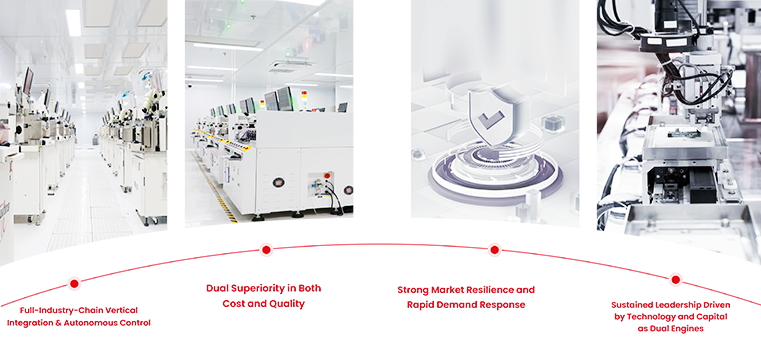
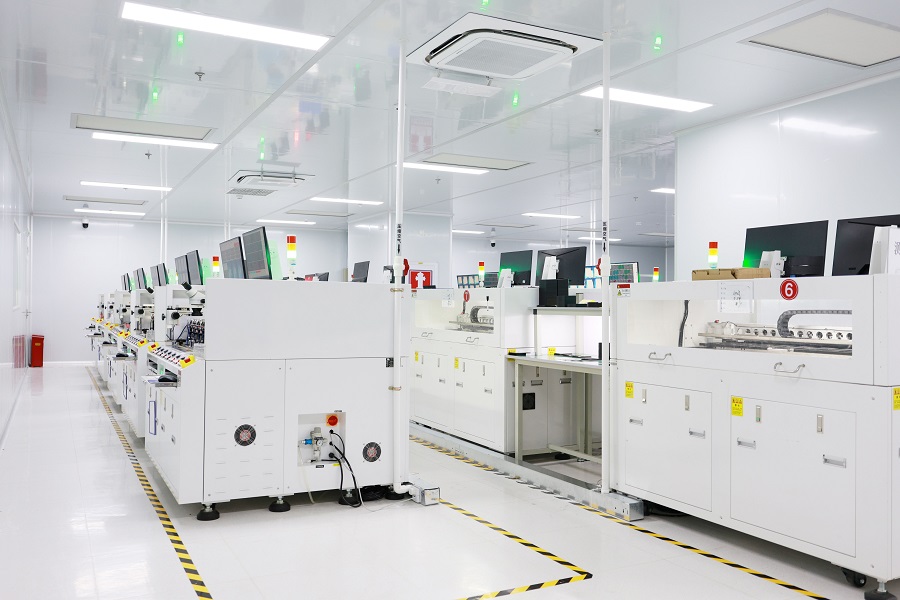
For an SSD manufacturer, reliability begins long before the final product reaches customers.
Through production and validation experience, we have learned that SSD stability is influenced by many details throughout the manufacturing process.
During Taimi SSD production and validation, we focus on:
- NAND flash evaluation
- SMT process control
- Firmware verification
- Performance testing
- Reliability validation
These steps help identify potential issues before products enter real-world applications.
The objective is not simply to achieve high benchmark results.
It is to build SSD products that maintain consistent performance and reliability during everyday workloads.
How to Check SSD Health
Users can monitor SSD condition through SMART information provided by storage monitoring tools.
However, SSD health is not determined by a single value. Health percentage, temperature, total writes, and error information should be evaluated together.
For a detailed explanation of SSD health percentage, SMART data, and how to identify potential SSD problems, see our guide:
SSD Health Check: How to Check SSD Lifespan and Condition (2026 Guide)
Common SSD health indicators include:
| Indicator | Meaning | |
|---|---|---|
| Total Host Writes | Amount of data written to the SSD | |
| Health Percentage | Estimated remaining endurance | |
| Temperature | Operating condition | |
| Wear Level | NAND usage status | |
| Error Records | Possible reliability issues |
Regular SSD health checks are especially useful for systems with heavy workloads.
Frequently Asked Questions About SSD TBW
Does higher TBW mean a better SSD?
A higher TBW rating usually indicates stronger write endurance. However, SSD quality also depends on NAND selection, controller design, firmware optimization, and manufacturing consistency.
Will an SSD fail after reaching TBW?
No. TBW is not a guaranteed failure point. It is an endurance rating based on testing conditions.
How can I check SSD lifespan?
Users can check SSD health through SMART monitoring tools, which provide information such as total writes, wear level, temperature, and health status.
Does TBW affect SSD warranty?
TBW is one factor used to define SSD endurance specifications. Warranty terms may vary depending on product series, usage conditions, and manufacturer policies.
Is a higher TBW SSD always better for gaming?
Not necessarily. Gaming workloads usually involve more reading than continuous writing. Factors such as latency, controller performance, and thermal management can also affect gaming experience.
Final Thoughts
TBW is an important specification for understanding SSD endurance, but it does not define the entire lifespan of a drive.
A reliable SSD requires a combination of:
- Quality NAND flash
- Stable controller technology
- Optimized firmware
- Effective thermal management
- Consistent manufacturing processes
From an engineering perspective, SSD reliability is the result of continuous improvement across design, validation, and manufacturing.
Every stage, from NAND selection to final testing, plays a role in creating storage products that users can rely on. To see how these engineering standards are applied throughout our entire production line, explore our complete guide on the
Related Products
Recommended Articles
Cloned SSD Won’t Boot After Migration? 7 Fixes to Start Windows Again
2026-07-13
More
PCIe 4.0 vs. 3.0: An Engineering Reality Check on Performance
2026-07-08
More
Taimi SSD Technology: Wafer-Level Testing & Signal Integrity for Enterprise SSD Reliability
2026-07-06
More
New SSD Not Showing Up? Here's How to Fix It in 3 Simple Steps (2026 Guide)
2026-07-03
More
PCIe vs. SATA SSD: A 2026 Engineer’s Guide to Storage Upgrades
2026-07-02
More
PCIe 4.0 vs. SATA SSD: Choosing the Right Storage for OEM Projects (No Fluff)
2026-06-26
More
SVIAZ 2026 Recap: Moscow, Data, and Our Manufacturing Reality
2026-04-02
More