
Company Introduction
More














SSD Manufacturing Quality Control: Inside Taimi SMT Production Process
Share:
Building a reliable consumer SSD starts with precise PCB assembly. SMT accuracy directly affects solder reliability, signal stability, and long-term drive performance. As part of the complete
When placed inside laptops or desktop PCs, SSDs experience constant temperature swings. A single cold solder joint, minor component offset, or hidden micro-bridge under a BGA chip can cause intermittent drive drops, thermal throttling, or total hardware failure.
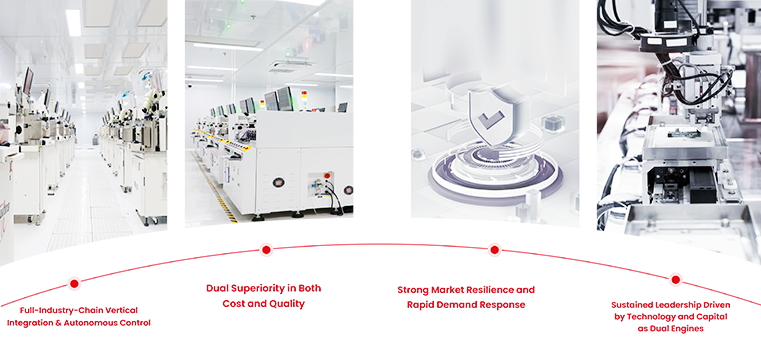
At Taimi, we manage our SMT lines directly. Our Shenzhen manufacturing facility covers more than 10,000㎡ and is equipped with 8 SMT production lines, supporting monthly SSD production capacity of up to 800,000 units across consumer storage product lines.
From solder paste printing and precision component placement to automated inspection and final validation, we control each manufacturing stage internally to maintain consistent SSD quality for different applications.
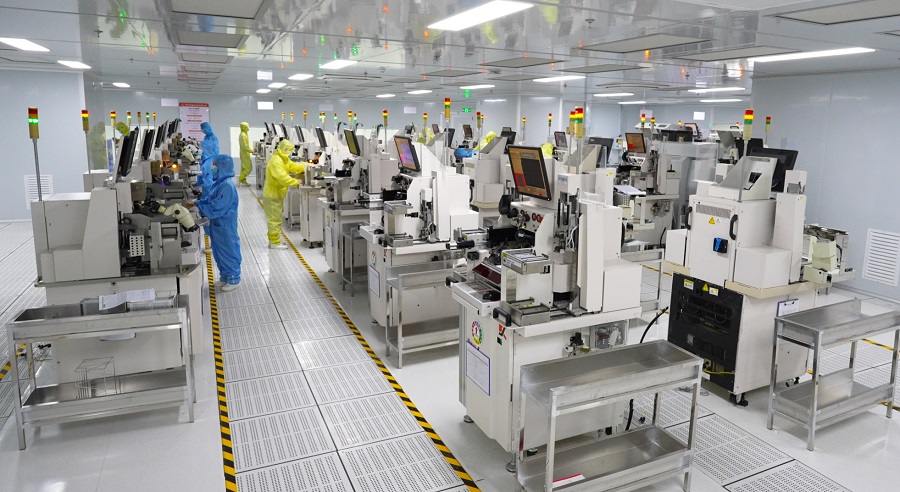
Solder Paste Deposition & 3D SPI Inspection
High-speed PCIe NVMe signals require low impedance and stable trace connections. Solder joint volume variations directly affect high-frequency signal quality.
-
Automated Stencil Printing: We use custom laser-cut stencils to apply lead-free solder paste across the raw PCB pads.
-
3D SPI (Solder Paste Inspection): Every board passes through a 3D SPI scanner before component placement. The system measures paste volume, height, surface area, and alignment. If paste volume strays beyond our defined tolerances, the PCB is automatically removed from the line. This stops cold joints and shorts before the board ever reaches the reflow oven.
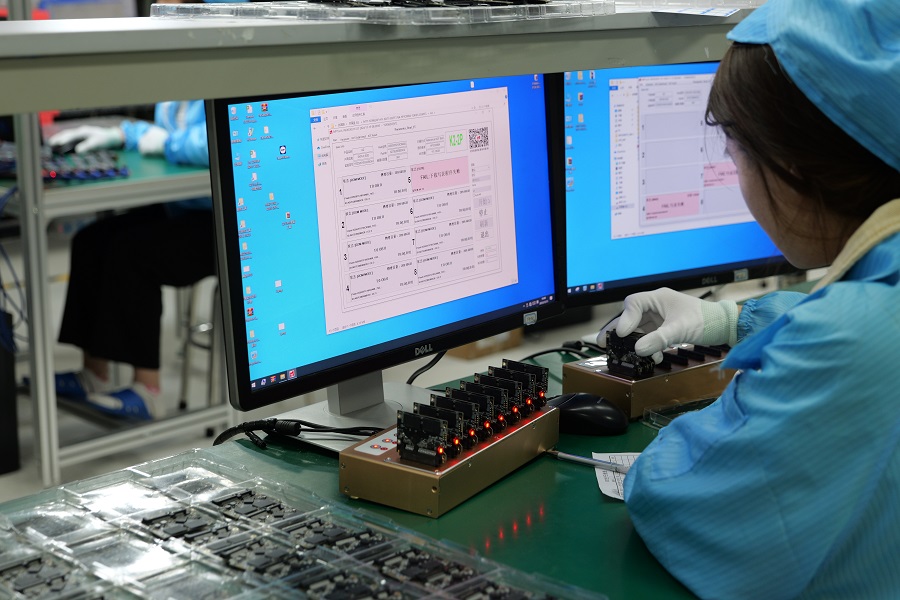
Component Placement & DRAM Alignment
Modern consumer SSDs leave very little room for placement error, especially on double-sided M.2 SSD PCBs with dense passive components.
-
High-Speed Pick-and-Place: Our SMT mounters place components down to 01005 package sizes at tight placement tolerances.
-
Vision-Guided BGA Alignment: For our performance drive lines featuring onboard DRAM cache chips, placement heads use optical alignment systems to register high-density Ball Grid Array (BGA) pads. Perfect pin-to-pad alignment prevents bridging during reflow.
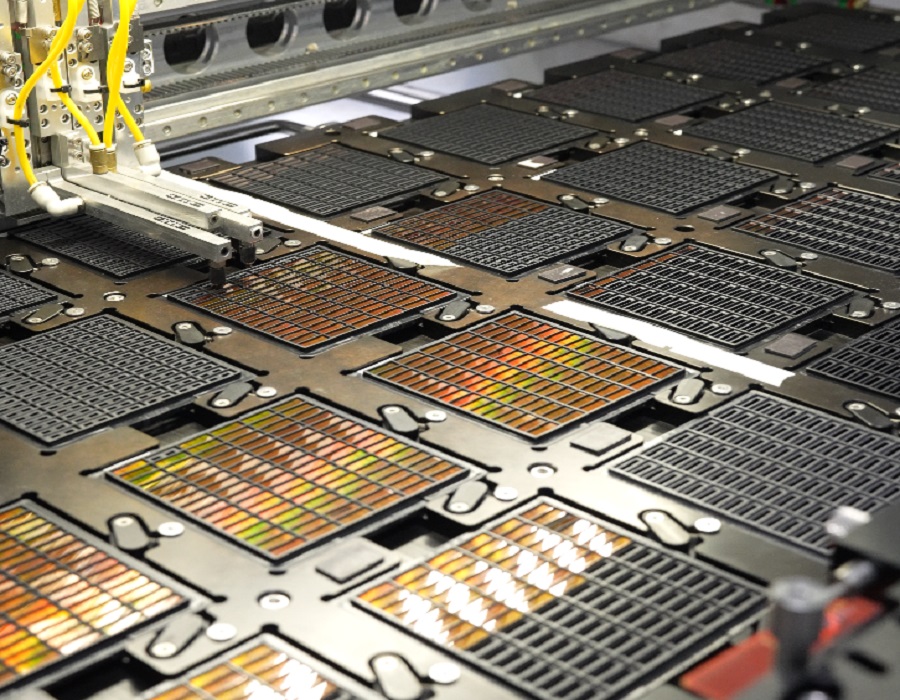
Multi-Zone Reflow Soldering with Nitrogen (N₂)
Component-loaded PCBs move directly into a multi-zone reflow oven. Getting the temperature profile right is essential: too much heat risks damaging the silicon dies, while too little leads to weak solder joints.
-
Zoned Thermal Profiles: We set temperature zones specifically for the copper density and board thickness of M.2 PCBs.
-
Nitrogen (N₂) Purging: Soldering under a Nitrogen blanket reduces oxygen levels during the melting phase. This prevents pad oxidation, lowers voiding rates, and strengthens the overall joint structure.
Post-Reflow Quality Inspection: 3D AOI & BGA X-Ray
To keep factory yields high and RMA rates low for our distribution partners, we use two levels of automated testing post-reflow:
3D Inline AOI (Automated Optical Inspection)
Right after reflow, 3D AOI cameras scan every board for visible surface defects, including:
-
Component tombstoning, shifting, or pin lifting
-
Solder bridges and insufficient solder fillets
-
Missing passives or reversed component polarity
High-Resolution X-Ray Inspection for BGAs
Main controllers, DRAM cache chips, and NAND packages use BGA packaging. Because the solder joints sit hidden beneath the chip, optical cameras cannot inspect them.
Catching hidden solder bridges or voids here is vital to prevent severe user issues down the line—such as when an
We use X-Ray Inspection to look straight through BGA chips, checking for:
-
BGA Solder Void Ratio: Keeping internal air voids well below IPC standard limits.
-
Hidden Micro-Bridging: Catching solder shorts between closely spaced BGA pads.
-
Ball Collapse Uniformity: Confirming the chip sits flat across all contact points.
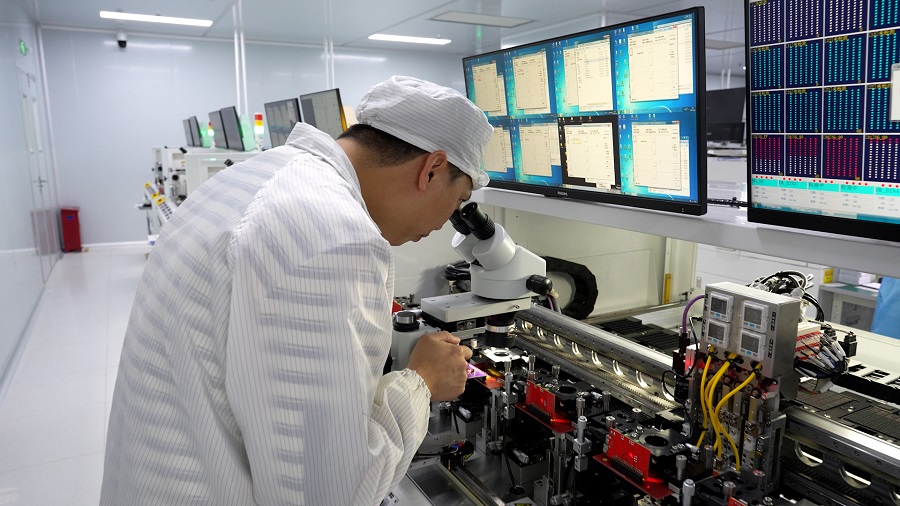
Taimi SMT Quality Control Summary
| Stage | Inspection Tech | What It Catches | Real-World Impact on SSDs |
| Solder Deposition | 3D SPI | Bad solder volume, pad offset, uneven paste height | Prevents shorts and weak solder joints before mounting chips. |
| Component Placement | Precision Pick-and-Place | Misaligned 01005 passives, PMICs, DRAM & NAND | Keeps component layouts tight on compact M.2 2280/2242 PCBs. |
| Post-Reflow Assembly | 3D Inline AOI | Tombstoning, shifted components, surface bridges | Detects visible surface defects immediately after reflow soldering. |
| BGA Internal Check | High-Resolution X-Ray | Hidden solder voids, micro-bridges under BGA chips | Inspects invisible joints under Controllers, DRAM, and NAND packages. |
Post-SMT Validation: Firmware & Thermal Burn-In
Passing SMT inspection verifies the physical hardware. Once assembly is complete, drives move to functional testing:
-
Firmware Flashing: Loading optimized firmware tuned for controller-NAND performance, power states, and heat management.
-
Thermal Stress & Burn-In: Running continuous read/write cycles under elevated thermal stress to catch early hardware failures before shipping.
-
Platform Compatibility Validation: Performing extensive
SSD compatibility testing
After compatibility validation, engineers also evaluate SSD performance consistency under different workloads, including PCIe bandwidth, firmware behavior, thermal throttling, and sustained write performance. Learn more about SSD performance troubleshooting in our guide: Why Is My SSD Slow After Installation? Causes and Fixes Explained.
Frequently Asked Questions (FAQ)
Q1: Why is SMT quality control so important for consumer NVMe SSDs?
A: Consumer NVMe drives operate at high clock rates inside tight laptop cases and PC builds. Thermal cycling causes PCB expansion and contraction. Proper SMT soldering prevents joints from cracking or failing under everyday heat load.
Q2: What is the difference between AOI and X-Ray inspection in SSD manufacturing?
A: AOI uses optical cameras to inspect visible components on the PCB surface. X-Ray inspection uses radiation to look inside hidden BGA chip packages—like main controllers, DRAM cache, and NAND Flash—to evaluate solder ball void ratios and structure.
Q3: How do you protect heat-sensitive NAND Flash during reflow soldering?
A: We manage thermal zones in the reflow oven and use Nitrogen (N₂) purging. This allows solder to flow cleanly without overheating the internal silicon dies of the NAND Flash or onboard PMIC chips.
Q4: What makes Taimi different from an SSD assembly supplier?
A: Unlike simple assembly providers, Taimi manages key manufacturing processes including SMT assembly, firmware optimization, testing, and quality validation internally. This integrated approach helps OEM/ODM customers achieve better consistency, compatibility, and production reliability.
Reliable Consumer Storage Built for Performance
Quality control at Taimi isn't checked at the end of the line—it is built into every step of our SMT process. By keeping strict control over paste printing, mounting precision, thermal profiles, and X-Ray inspection, we produce consumer SSDs that handle daily workloads reliably.
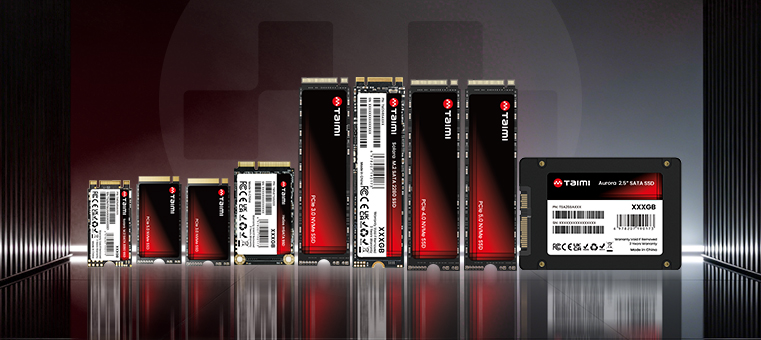
Looking for an experienced SSD manufacturer for OEM/ODM projects? Taimi provides customized storage solutions including NVMe SSD, SATA SSD, and embedded storage products for industrial, commercial, and consumer applications with flexible customization options.
Related Products
Recommended Articles
SSD Manufacturing Quality Control: Inside Taimi SMT Production Process
2026-07-24
More
Why an SSD Is Detected in BIOS but Not Showing in Windows
2026-07-22
More
Taimi SSD Technology: Wafer-Level Testing & Signal Integrity for Enterprise SSD Reliability
2026-07-06
More
PCIe 4.0 vs. 3.0: An Engineering Reality Check on Performance
2026-07-08
More
PCIe vs. SATA SSD: A 2026 Engineer’s Guide to Storage Upgrades
2026-07-02
More
Taimi Launches Official Website, Expanding Global Reach in High-Performance Storage Solutions
2026-06-30
More
Taimi’s Integrated Manufacturing Strategy: Insights from Eletrolar Show 2026
2026-06-24
More