
Company Introduction
More















SSD Burn-in Testing Explained: How SSD Manufacturers Ensure Reliability Before Shipping
Share:
During SSD production and validation, one common misunderstanding is that benchmark performance alone can represent product quality.
However, these specifications only represent the performance capability of an SSD under specific test conditions. They do not fully reflect how the drive will perform after weeks, months, or years of continuous operation.
In production environments, engineers need to evaluate more than benchmark results before approving an SSD for shipment.
Before shipment, professional SSD production lines perform burn-in testing — a reliability validation process designed to verify long-term stability, thermal behavior, firmware performance, and hardware consistency.
So, what is SSD burn-in testing, and why is it important before an SSD reaches customers?
This article explains how manufacturers use burn-in testing to improve SSD reliability and ensure consistent quality for real-world applications.
What Is SSD Burn-in Testing?
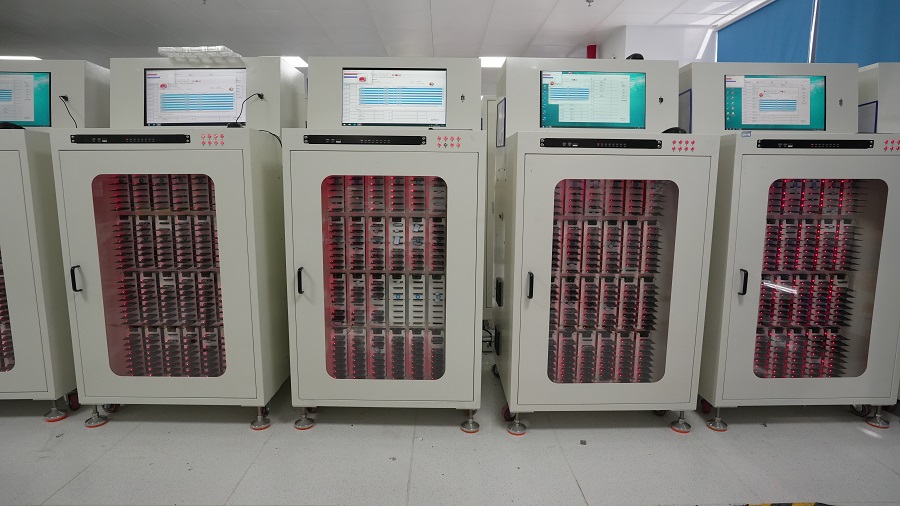
SSD burn-in testing is a reliability verification process that operates SSDs under controlled workloads for an extended period before final shipment.
Unlike standard speed tests that measure short-term performance, burn-in testing focuses on identifying potential problems that may appear during continuous operation.
During burn-in testing, SSDs may be evaluated under conditions including:
- Continuous read and write workloads
- Extended operating periods
- Temperature stress conditions
- Repeated power cycles
- Performance and error monitoring
The purpose is not to increase SSD performance, but to identify unstable units before they enter the market.
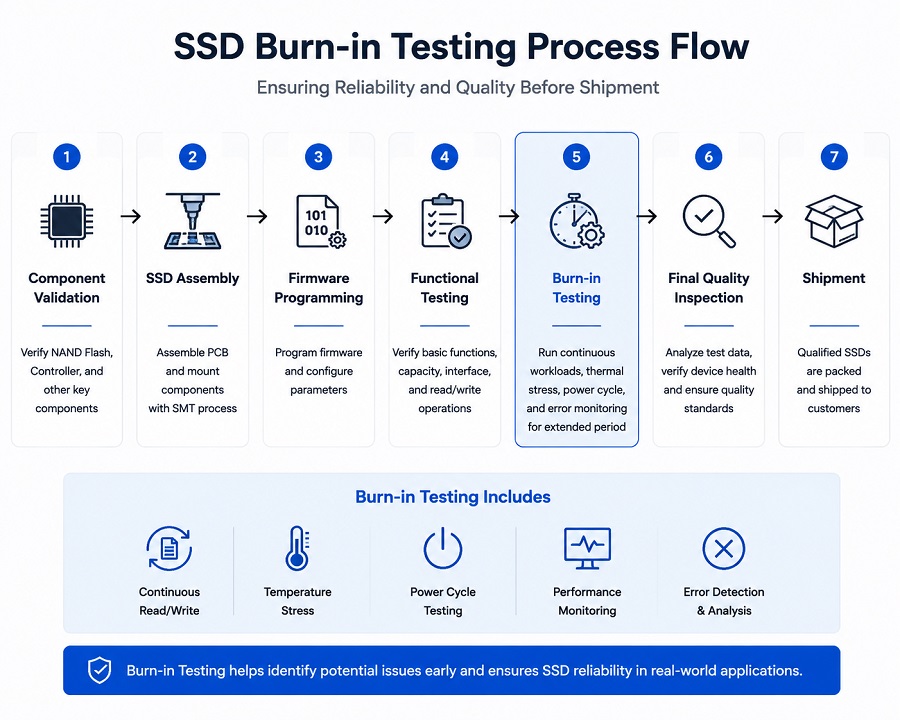
A typical SSD reliability validation process includes:
Burn-in testing is one stage of the complete SSD manufacturing workflow. To understand how SSDs move from N
Component Validation
        ↓
SSD Assembly
        ↓
Firmware Programming
        ↓
Functional Testing
        ↓
Burn-in Testing
        ↓
Final Quality Inspection
        ↓
Shipment
Burn-in testing represents an important step between SSD manufacturing and real-world deployment.
Why Is SSD Burn-in Testing Important?
Detecting Problems That Short Tests Cannot Reveal
One of the main purposes of SSD burn-in testing is identifying potential failures before products are delivered.
Some hardware issues may not appear during short functional tests.
For example:
- NAND flash instability
- Controller communication problems
- Component reliability issues
- Unexpected error behavior
By running SSDs under extended workloads, manufacturers can detect abnormal behavior earlier.
This helps reduce early product failures and improves batch consistency, especially for OEM customers that deploy thousands of SSDs across different systems.
Verify Long-Term Thermal Stability
Modern SSDs, especially high-performance NVMe SSDs, can generate significant heat during intensive workloads.
When temperatures increase, SSD controllers may reduce operating speed through thermal throttling to protect the hardware.
A reliable SSD should maintain stable operation under sustained workloads.
Burn-in testing allows manufacturers to evaluate:
- Controller temperature behavior
- Sustained read/write performance
- Thermal management effectiveness
- Performance consistency over time
This is particularly important for:
- Gaming computers
- Workstations
- Industrial PCs
- Enterprise storage applications
Peak benchmark numbers are important, but stable performance during long-term operation is what determines real user experience.
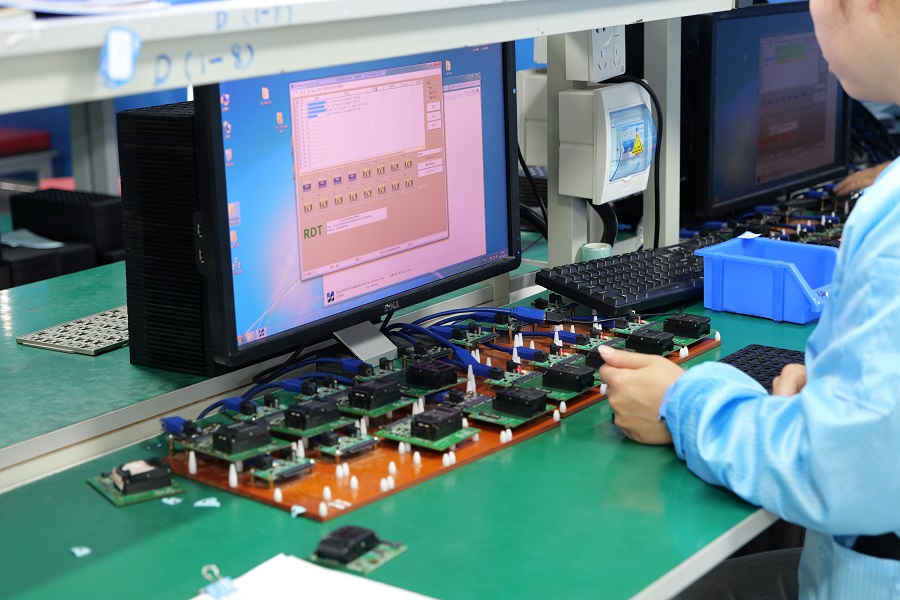
Validate SSD Firmware Reliability
SSD performance depends not only on NAND flash and controllers but also on firmware optimization.
Firmware manages critical functions such as:
- Error correction
- Garbage collection
- Wear leveling
- Data management
- Power control
During burn-in testing, manufacturers verify whether firmware can maintain stable operation under different workloads.
A properly optimized firmware system helps ensure:
- Consistent performance
- Better data reliability
- Stable power behavior
- Improved compatibility
This is why two SSDs with similar hardware specifications may deliver different long-term results.
How SSD Burn-in Testing Works in Production
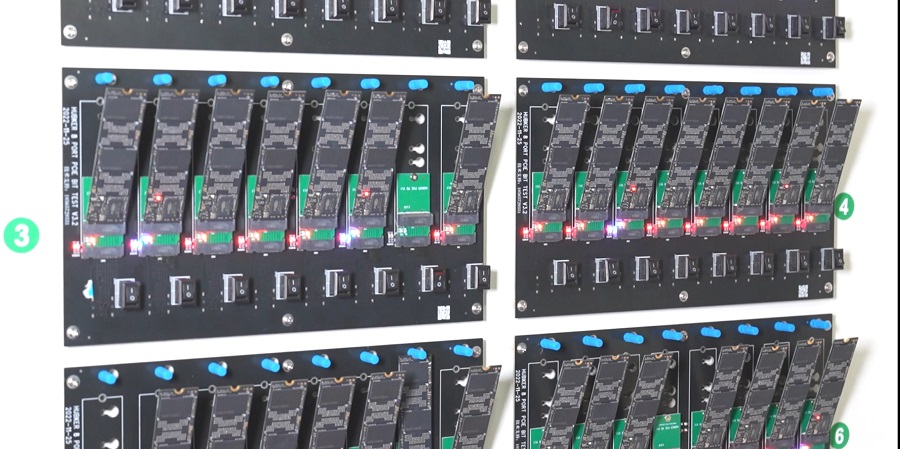
Professional SSD manufacturers combine multiple testing methods to validate product reliability.
These reliability procedures are built on earlier quality control processes during SSD assembly and PCB production, where manufacturing consistency is established before final validation.
Step 1: Functional Testing
Before burn-in testing, SSDs undergo basic validation.
Engineers verify:
- Device recognition
- Storage capacity
- Interface communication
- Basic read/write functions
This ensures that only qualified drives proceed to reliability testing.
Step 2: Continuous Workload Testing
During burn-in testing, SSDs operate under controlled workloads.
Testing may include:
- Continuous data writing
- Repeated read/write operations
- Performance monitoring
- Error detection
The objective is to verify that SSD performance remains stable during extended operation.
Step 3: Temperature and Power Cycle Validation
Real-world devices experience different operating conditions.
For example:
- Frequent system restarts
- Long working hours
- Temperature changes
Manufacturers evaluate SSD behavior during these conditions to verify:
- Startup reliability
- Power recovery stability
- Thermal response
- Data integrity
Step 4: Final Quality Verification
After completing burn-in testing, engineers review test results before shipment.
The final verification process may include:
| Test Item | Purpose |
|---|---|
| Performance Data | Confirm specifications |
| Error Records | Identify abnormal behavior |
| Device Health Information | Verify SSD status |
| Test Results | Confirm quality standards |
Device health information is also important after an SSD enters daily operation. Users can monitor health percentage, SMART data, temperature, total host writes, and error records to understand how the drive condition changes over time.
For a practical guide on monitoring SSD lifespan and checking drive condition, see our SSD Health Check guide.
Only products that pass reliability requirements move to final packaging and delivery.
SSD Burn-in Testing vs. Performance Testing
Performance testing and burn-in testing serve different purposes.
| Testing Type | Main Purpose | Example |
|---|---|---|
| Performance Testing | Measure SSD speed | Read/write benchmark |
| Compatibility Testing | Verify system support | BIOS and OS recognition |
| Reliability Testing | Validate long-term stability | Extended operation |
| Burn-in Testing | Detect early failures | Stress and endurance validation |
Performance testing answers:
How fast can this SSD operate?
Burn-in testing answers:
Can this SSD maintain stable operation over time?
Both are necessary for professional SSD quality control.
Why Burn-in Testing Matters for OEM SSD Customers
For consumer users, SSD speed is often the first consideration.
However, OEM customers and system manufacturers usually focus on additional factors:
- Product consistency
- Failure rate
- Long-term reliability
- Stable supply capability
When thousands of SSDs are deployed across different systems, even a small reliability issue can create significant maintenance costs.
Therefore, SSD manufacturers use reliability testing processes such as burn-in testing to improve product consistency before mass shipment.
How Taimi Ensures SSD Reliability Before Shipment
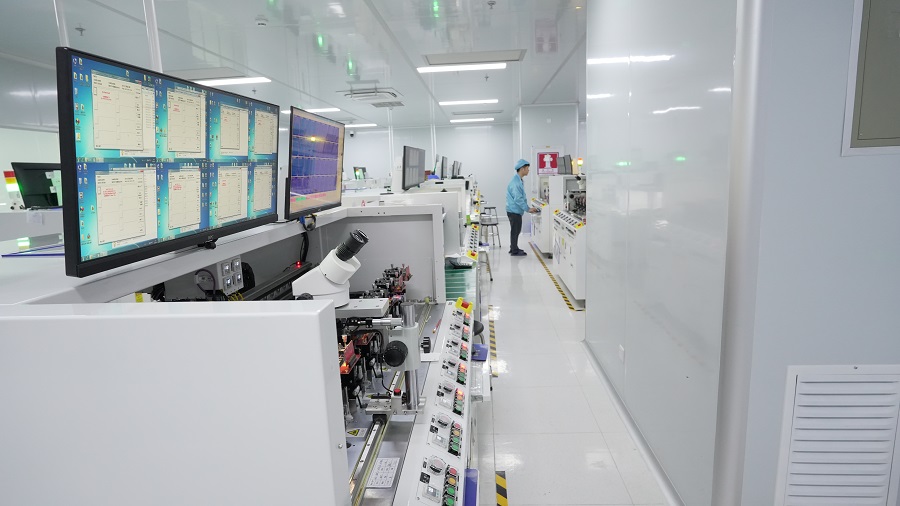
At Taimi, SSD reliability is supported by multiple quality validation stages throughout production.
Our quality approach includes:
- NAND flash quality verification
- SMT production inspection
- Firmware optimization
- Functional testing
- Reliability validation supported by semiconductor-level testing methods
From component selection to finished SSD testing, Taimi focuses on delivering storage products with stable performance and consistent quality for global customers.
Related articles:
- From NAND Flash to Finished SSD: Inside the SSD Manufacturing and Testing Process
- SSD Manufacturing Quality Control: Inside Taimi SMT Production Process
- Taimi SSD Technology: Wafer-Level Testing & Signal Integrity for Enterprise SSD Reliability
Conclusion: SSD Reliability Requires More Than Performance Numbers
A reliable SSD is not defined only by benchmark results.
Long-term storage reliability depends on:
- Stable hardware design
- Optimized firmware
- Effective thermal management
- Comprehensive production testing
SSD burn-in testing helps manufacturers identify potential issues before shipment and ensures that products can maintain stable operation in real-world environments.
For professional SSD manufacturing, reliability validation is not an optional step — it is a necessary part of delivering consistent storage solutions.
FAQ
What is SSD burn-in testing?
SSD burn-in testing is a reliability validation process that operates SSDs under controlled workloads for an extended period to verify stability before shipment.
Why do SSD manufacturers perform burn-in testing?
Manufacturers use burn-in testing to identify early failures, verify thermal stability, and confirm firmware reliability before products reach customers.
What problems can SSD burn-in testing detect?
Burn-in testing can help identify potential issues related to hardware stability, temperature behavior, firmware operation, and long-term performance consistency.
Is burn-in testing necessary for NVMe SSDs?
Yes. High-performance NVMe SSDs can experience greater thermal and workload pressure, making reliability validation especially important.
Does burn-in testing improve SSD lifespan?
Burn-in testing does not extend NAND endurance directly. Instead, it helps manufacturers identify unstable products and improve overall product reliability.
Related Products
Recommended Articles
Why Is My SSD Slow After Installation? Causes and Fixes Explained
2026-07-29
More
SSD Manufacturing Quality Control: Inside Taimi SMT Production Process
2026-07-24
More
Why an SSD Is Detected in BIOS but Not Showing in Windows
2026-07-22
More
SSD Not Detected in BIOS? What SSD Compatibility Testing Reveals
2026-07-17
More
SSD TBW Explained: What It Means and How It Affects SSD Lifespan
2026-07-15
More
Taimi SSD Technology: Wafer-Level Testing & Signal Integrity for Enterprise SSD Reliability
2026-07-06
More
New SSD Not Showing Up? Here's How to Fix It in 3 Simple Steps (2026 Guide)
2026-07-03
More