











Introduction: Understanding 2.5-Inch SATA SSD Prices
The 2.5-inch SATA SSD remains a practical storage solution for desktop computers, laptop upgrades, office systems, and various commercial applications. For wholesalers, PC builders, distributors, and OEM buyers, understanding the 2.5-inch SATA SSD price is essential when planning inventory and evaluating bulk purchasing costs at Taimi Storage.
However, SSD prices are not determined by storage capacity alone. NAND flash type, controller selection, DRAM configuration, firmware development, manufacturing requirements, and order volume can all influence the final quotation.
For bulk buyers, the key is to identify the right balance between product specifications, reliability, and purchasing cost. This guide explains how different capacities affect 2.5-inch SATA SSD costs, which hardware components influence pricing, and what information buyers should prepare before requesting a wholesale quotation.
The price of a 2.5-inch SATA SSD varies mainly by storage capacity, NAND flash type, controller configuration, DRAM design, and order volume. Higher-capacity models generally require more NAND flash, while smaller-capacity drives may have a higher fixed component cost per gigabyte. For wholesale buyers, the actual unit price depends on the selected specifications and purchasing quantity.
1. 2.5-Inch SATA SSD Price by Storage Capacity
Storage capacity is one of the most visible factors affecting the cost of a 2.5-inch SATA SSD. Different capacities require different NAND flash configurations, which influence the overall bill of materials (BOM) and manufacturing costs.
The following table provides a relative cost reference across common capacities for bulk purchasing evaluation.
| Capacity | Typical Application | Relative Cost Level | Main Cost Drivers |
|---|---|---|---|
| 128GB | Basic office systems and entry-level devices | Lower | High baseline BOM ratio (controller & assembly) |
| 256GB | Everyday computing and office PCs | Low to Medium | NAND flash selection and entry-level controller |
| 512GB | Business desktops and general-purpose PCs | Medium | NAND density and component configuration |
| 1TB | High-capacity business systems and media PCs | Medium to High | Higher NAND flash density and endurance requirements |
| 2TB | Large-scale data storage and workstation drives | Higher | Multiple NAND dies, higher capacity management |
Note on Pricing: The relative cost levels refer to indicative unit-cost differences, not price per gigabyte. Actual cost relationships may vary depending on NAND availability, component configuration, and order volume.
1.1 128GB SATA SSD: Entry-Level Storage
A 128GB SATA SSD is generally designed for basic storage requirements, including operating system installation, office applications, and upgrading older computers.
For distributors and PC assemblers serving entry-level markets, this capacity offers an affordable storage option. However, because fixed assembly and controller costs make up a higher percentage of the overall drive cost, buyers should evaluate actual NAND configurations rather than advertised capacity alone.
1.2 256GB SATA SSD: A Practical Option for Everyday Systems
A 256GB SATA SSD offers additional storage space for everyday computing. It is widely used in standard office computers, basic business systems, and general PC upgrades.
For bulk buyers, this capacity represents a balanced option for cost-conscious computer configurations. Final purchasing costs depend on NAND quality, controller selection, firmware optimization, and order volume.
1.3 512GB SATA SSD: A Flexible Choice for Bulk Buyers
A 512GB SATA SSD provides expanded storage capacity for business computers, desktop systems, and general-purpose applications. For PC builders and wholesalers, it is often the preferred baseline capacity for modern client systems.
When comparing 512GB SATA SSD wholesale prices, buyers should consider sustained write performance, NAND type, and specification consistency across production batches.
1.4 1TB and 2TB SATA SSD: Higher-Capacity Storage
For applications requiring substantial storage space, 1TB and 2TB SATA SSDs provide higher-capacity options. These products require higher-density NAND flash configurations, and overall costs scale based on NAND die count, controller capability, and endurance requirements.
Bulk buyers should verify that target application requirements align with market pricing for higher-capacity configurations.
2. What Factors Affect the Cost of a 2.5-Inch SATA SSD?
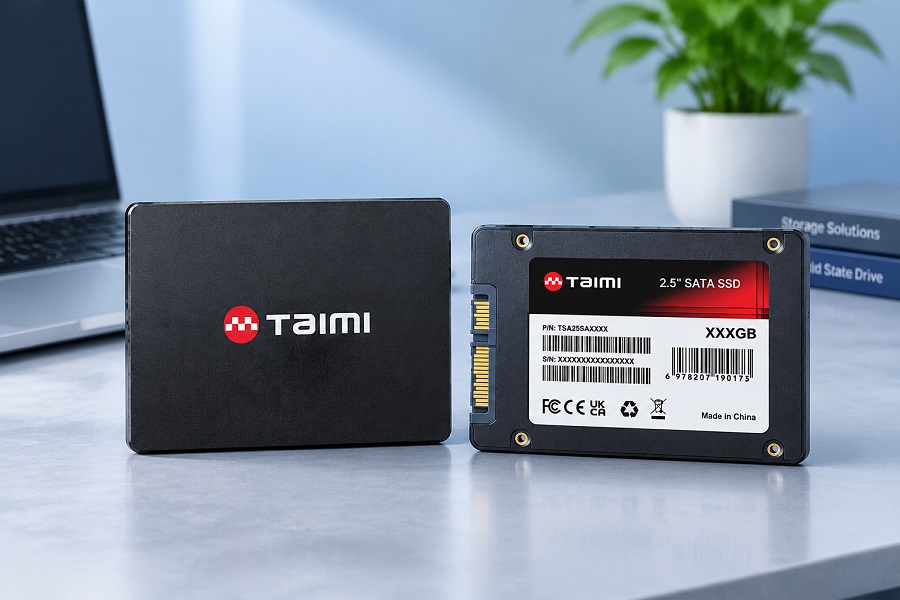
Two 2.5-inch SATA SSDs with identical storage capacities may carry different wholesale quotations because their internal component selections and manufacturing configurations differ. Understanding these hardware variables helps buyers evaluate overall factors affecting SSD wholesale pricing.
2.1 NAND Flash Type and Quality
NAND flash memory represents the largest single component cost inside an SSD.
- TLC NAND: Stores three bits per cell and is the standard for most consumer and commercial SSDs, offering a balanced combination of performance, endurance, and cost.
- QLC NAND: Stores four bits per cell, providing higher storage density at a lower cost per bit. Endurance and sustained write performance should be evaluated based on application workloads.
Beyond NAND architecture, component tiering, sourcing consistency, and batch validation also influence final drive pricing.
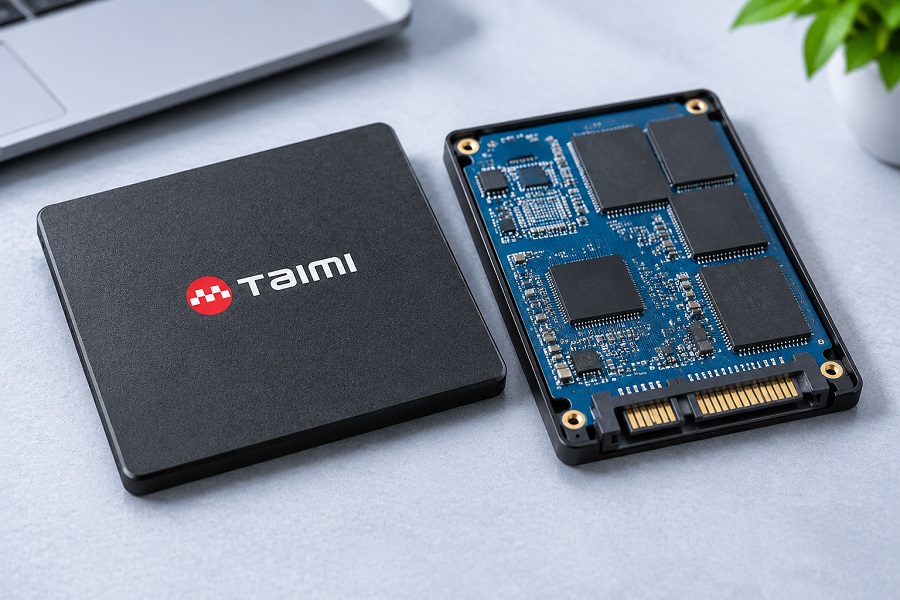
2.2 SSD Controller and Firmware
The SSD controller manages host interface communication, flash translation layers, wear leveling, and error correction (ECC). Controller cost varies depending on processing architecture, channel count, and feature support.
Custom or optimized firmware ensures stable communication between the selected controller and NAND flash, protecting drive reliability over time.
2.3 DRAM vs. DRAM-less Architecture
The inclusion of dedicated DRAM caching is another factor influencing drive cost.
| Factor | DRAM SSD | DRAM-less SSD |
|---|---|---|
| Dedicated DRAM | Included | Not included |
| Component Cost | Higher BOM cost | Lower BOM cost |
| Mapping Management | Dedicated DRAM for mapping data | Controller SRAM and NAND-based mapping techniques |
| Target Application | Heavy multitasking / Sustained workloads | Standard client PCs / Cost-sensitive systems |
DRAM-less architectures can reduce hardware component costs while providing adequate performance for many typical client workloads, depending on the controller and workload requirements.
2.4 Manufacturing Validation and Quality Assurance
Final drive costs reflect complete manufacturing and quality control requirements, including:
- PCB design and passive component grade selection.
- Automated SMT assembly and soldering validation.
- Firmware programming and drive initialization.
- High-temperature burn-in testing and functional verification.
3. 2.5-Inch SATA SSD vs. NVMe SSD: Cost and Application Comparison
When planning storage procurement, buyers frequently evaluate 2.5-inch SATA SSDs alongside M.2 NVMe SSDs.
| Specification | 2.5-Inch SATA SSD | M.2 NVMe SSD |
|---|---|---|
| Bus Protocol | SATA III (6Gb/s) | PCIe (Gen 3 / Gen 4) |
| Form Factor | 2.5-inch (7mm) | M.2 2280 |
| System Compatibility | Systems with a compatible 2.5-inch drive bay and SATA interface | A compatible M.2 PCIe/NVMe slot required |
| Primary Cost Drivers | Capacity, NAND selection, enclosure material | Capacity, NAND density, controller tier, PCIe spec |
A 2.5-inch SATA SSD remains the standard choice for systems requiring SATA interface compatibility, broad legacy support, or simple 2.5-inch drive bay installation.
4. How Bulk Buyers Should Determine SSD Product Specifications
Selecting the right 2.5-inch SATA SSD for wholesale projects involves matching target device requirements with the appropriate hardware configuration and choosing a dependable 2.5-inch SATA SSD supplier.
4.1 Define Capacity Based on Workload
- 128GB / 256GB: Suitable for entry-level PCs, thin clients, POS terminals, and basic OS boot drives.
- 512GB / 1TB: Recommended for general office desktops, commercial laptops, and system integration projects.
- 2TB: Intended for data-intensive storage applications and media archiving.
4.2 Review Key Performance Metrics
- Sequential Read / Write: Evaluates peak file transfer speeds over the SATA III interface (up to 550/500 MB/s class).
- Random Read / Write (IOPS): Indicates drive responsiveness under multitasking and system boot workloads.
- Terabytes Written (TBW): Measures total rated write endurance over the warranty period.
5. What Information to Prepare for a Wholesale Quotation
Providing complete specifications allows manufacturers to deliver accurate and efficient volume quotations when comparing SSD supplier quotations.
| Required Detail | Example Specification |
|---|---|
| Drive Type | 2.5-inch SATA III SSD |
| Target Capacities | 256GB / 512GB / 1TB |
| Enclosure Preference | Plastic casing / Metal casing |
| Order Volume | Initial sample order & estimated bulk volume |
| Project Type | PC assembly / Wholesale distribution / OEM Private Label |
| Target Region | Destination market for compliance verification |
6. Taimi 2.5-Inch SATA SSD Solutions and Manufacturing Capabilities
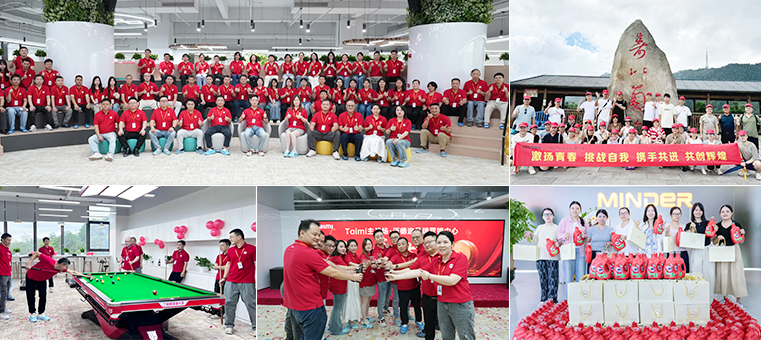
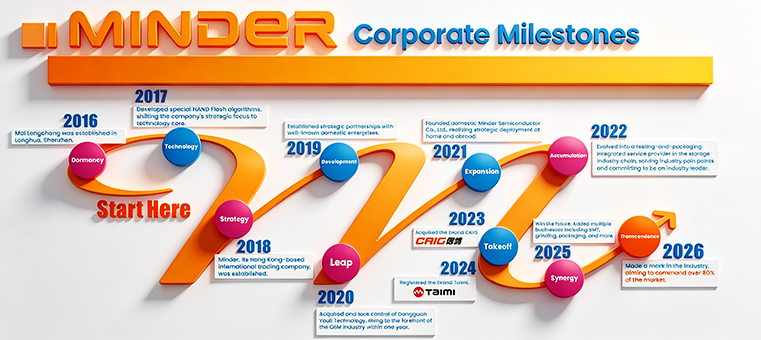
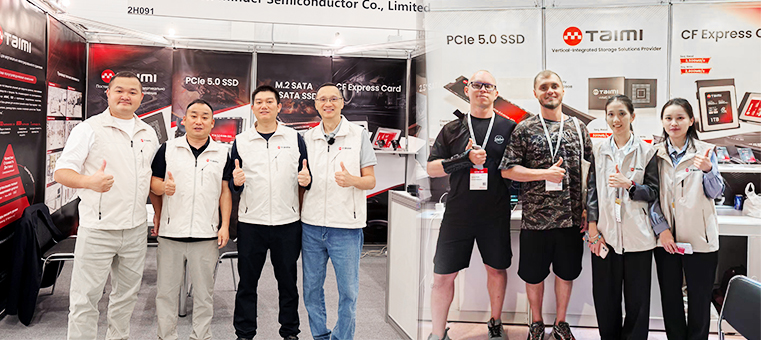
For distributors, PC builders, and OEM customers seeking consistent product quality and long-term supply support, Taimi provides reliable 2.5-inch SATA SSD solutions and manufacturing support. Taimi operates as the consumer-grade storage brand of Shenzhen Minder Semiconductor Co., Ltd.
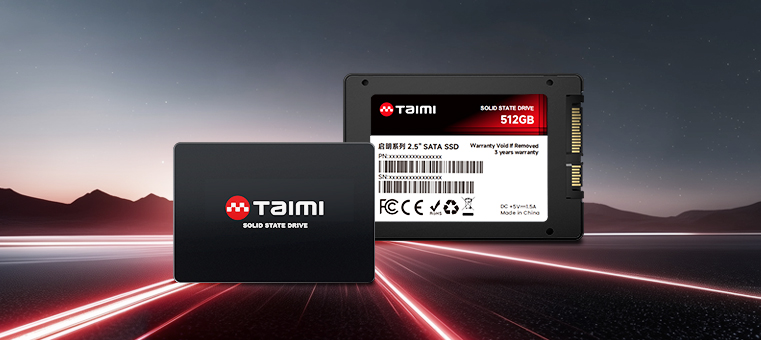
Taimi Qiming Series 2.5-Inch SATA III SSD Specifications
The following parameters represent standard engineering specifications for the Taimi Qiming (启明) 2.5-inch SATA III SSD series:
| Parameter | Engineering Specification |
|---|---|
| Product Series | Qiming (启明) Series |
| Model Numbers | TSA25SAXXX (Plastic Enclosure) | TSA25MAXXX (Metal Enclosure) |
| Interface | SATA III 6Gb/s (Backwards compatible with SATA II and SATA I) |
| Available Capacities | 128GB, 256GB, 512GB, 1TB, 2TB |
| NAND Flash Architecture | 3D NAND |
| Max. Sequential Speeds | Read up to 550 MB/s | Write up to 500 MB/s (capacity-dependent) |
| Max. Random Performance | Read up to 90,000 IOPS | Write up to 80,000 IOPS (capacity-dependent) |
| Dimensions (L x W x H) | 100.0 x 69.9 x 7.0 mm |
| Endurance Ratings (TBW) | 128GB: 70 TBW 256GB: 140 TBW 512GB: 240 TBW 1TB: 480 TBW 2TB: 960 TBW |
| Warranty Terms | 3-Year Limited Warranty or TBW limit, whichever occurs first |
| Supported Features | TRIM, S.M.A.R.T., Advanced Wear-Leveling, Garbage Collection, LDPC ECC |
Manufacturing Consistency and OEM Support
For distributors and PC assemblers, maintaining consistent product specifications across repeat orders is critical. Taimi supports customer projects through structured manufacturing and quality management:
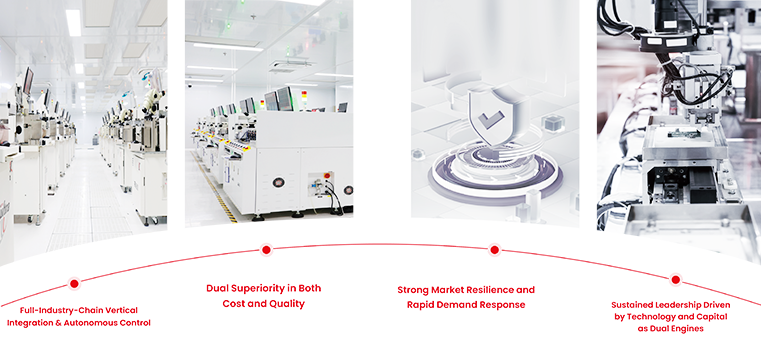
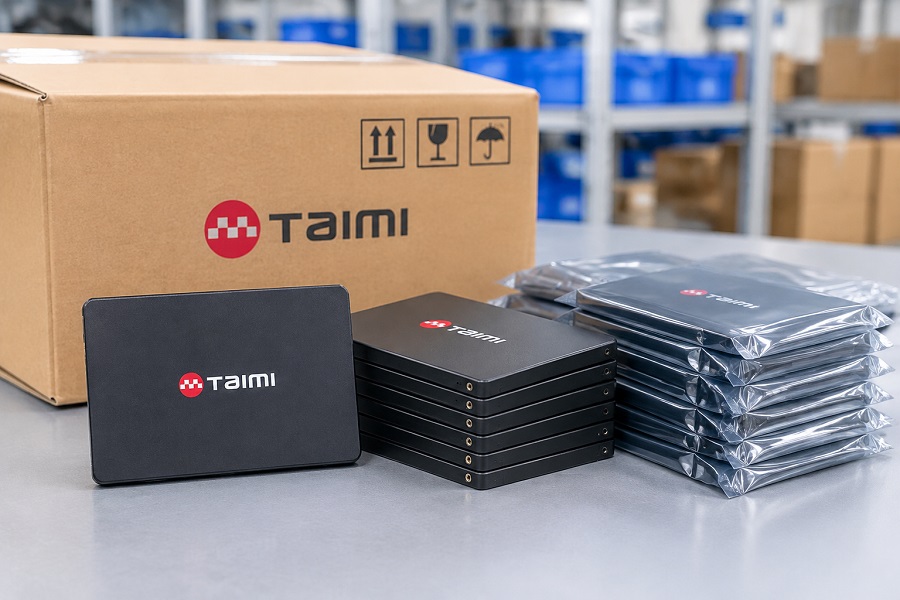
- Production Capacity: Taimi operates a manufacturing facility covering more than 10,000 square meters in Shenzhen, equipped with 8 automated SMT lines and supporting a monthly SSD production capacity of up to 800,000 units.
- Batch Consistency Management: Locked bill of materials (BOM) options and firmware validation ensure consistent product behavior across repeat production runs.
- Quality Control: Full functional testing, signal integrity checks, and high-temperature SSD reliability and burn-in testing before shipment.
- OEM Customization: Private label silk-screening, custom enclosure labeling, and customized packaging solutions.
7. Frequently Asked Questions
Wholesale prices are primarily driven by NAND flash market conditions, storage capacity, controller selection, enclosure material (plastic vs. metal), order volume, and specific warranty or branding requirements.
Smaller capacities (such as 128GB) carry a higher proportion of fixed component costs—including the PCB, controller, enclosure, and testing—relative to their storage volume. Larger capacities often benefit from better cost efficiency per gigabyte, although actual price differences depend on NAND pricing and product configuration.
Model TSA25SAXXX features a lightweight plastic enclosure suited for cost-sensitive standard applications. Model TSA25MAXXX features a metal enclosure providing enhanced structural durability.
Peak speeds up to 550 MB/s read and 500 MB/s write represent maximum series performance. Actual speeds on lower capacity drives (such as 128GB) may vary depending on active NAND flash channel configurations.
Standard MOQs depend on whether the order uses standard Taimi branding or requires OEM private labeling and custom packaging. Specific MOQs can be confirmed upon submitting project details.
8. Final Thoughts: Planning Your SATA SSD Procurement
Evaluating 2.5-inch SATA SSD prices requires balancing storage capacity, hardware component quality, and long-term manufacturing support. Selecting the right drive configuration helps ensure reliable system performance while optimizing total procurement costs.
Looking for a Reliable 2.5-Inch SATA SSD Manufacturer?
Whether you require 256GB, 512GB, 1TB, or 2TB SATA SSDs for PC assembly, distribution, or OEM projects, Taimi provides consistent product quality and bulk manufacturing support.
Need a Bulk Quote for 2.5-Inch SATA SSDs?
Share your required capacities, product specifications, and estimated order quantities with our team to discuss bulk purchasing options.
Contact Taimi for a Tailored Bulk Quote