












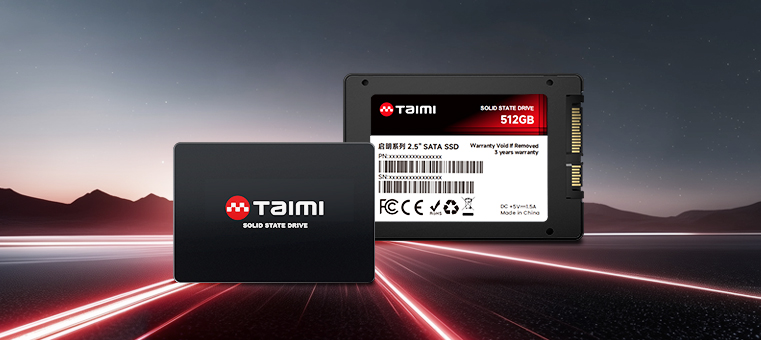

When sourcing SSDs in bulk for PC building, system integration, or wholesale distribution, choosing a supplier involves more than comparing unit prices. Two suppliers may quote what appears to be the same 1TB M.2 NVMe SSD, but their products can differ in NAND flash configuration, controller selection, firmware, performance, testing procedures, warranty coverage, and delivery terms.
These differences matter to distributors, PC builders, and OEM buyers. A lower quotation may not offer the same product configuration or service conditions as a higher one. Without a clear comparison, buyers may face unexpected costs, inconsistent specifications, compatibility issues, or delivery delays.
This guide explains how to compare SSD supplier quotes for bulk orders. It covers seven important evaluation factors, provides a practical supplier comparison checklist, and explains what buyers should confirm before approving a purchase.
Quick Answer: How Do You Compare SSD Supplier Quotes?
To compare SSD supplier quotes accurately, evaluate these seven factors:
- Product specifications: Confirm that suppliers are quoting the same capacity, form factor, interface, and performance requirements.
- Component configuration: Compare NAND flash, controller, DRAM or HMB architecture, and firmware.
- Performance: Review sequential speeds, random IOPS, sustained write behavior, and benchmark conditions.
- Pricing and MOQ: Compare unit prices, minimum order quantities, customization fees, and total procurement costs.
- Quality control: Ask about incoming inspection, production checks, functional testing, and final inspection.
- Warranty and support: Confirm warranty coverage, endurance conditions, and the RMA process.
- Lead time and delivery: Check sample approval, component availability, production schedules, and shipping terms.
Key takeaway: The best SSD quotation is not necessarily the cheapest. It is the offer that meets your technical requirements, quality expectations, budget, and delivery schedule under clearly defined terms.
1. Standardize SSD Specifications Before Comparing Quotes
Before comparing prices, establish a clear Request for Quotation (RFQ) baseline. Asking several suppliers for a "1TB SSD" is not enough to ensure that their quotations cover equivalent products.
For example, a 1TB M.2 NVMe SSD and a 1TB M.2 SATA SSD have different interfaces and protocols. Even among PCIe NVMe drives, the controller, NAND flash, DRAM architecture, and performance characteristics may vary.
Prepare a technical specification sheet and ask every supplier to confirm the same requirements:
- Capacity: 256GB, 512GB, 1TB, 2TB, or another required capacity. Clarify advertised capacity and usable capacity where relevant.
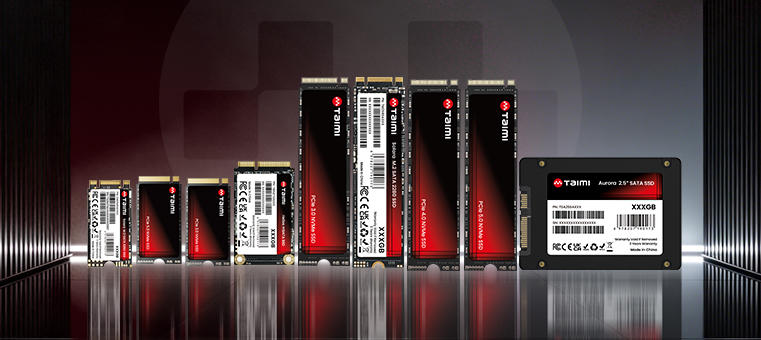
- Form factor: M.2 2280, M.2 2242, M.2 2230, 2.5-inch SATA, or another required format.
- Interface and protocol: SATA III or PCIe Gen 3/Gen 4, together with the supported protocol, such as AHCI or NVMe.
- NAND type: TLC, QLC, or another specified flash configuration.
- Performance: Required sequential read/write speeds and random 4K IOPS.
- Endurance: Required TBW rating or expected write workload.
- Additional requirements: DRAM cache, HMB, heatsink, custom firmware, serial number tracking, labeling, or OEM packaging.
Standardizing specifications makes supplier responses easier to compare. It also helps prevent a quotation from appearing cheaper simply because it covers a different product configuration.
For bulk procurement, it is useful to distinguish between mandatory specifications and optional requirements. For example, a specific interface or capacity may be essential, while customized packaging may be negotiable. This gives suppliers a clearer basis for preparing quotations and helps buyers evaluate alternatives without compromising critical requirements.
2. Compare NAND Flash, Controller, and Firmware Configurations
The internal components of an SSD influence its performance, endurance, cost, and operating characteristics. Buyers should therefore look beyond the product name and capacity when reviewing an SSD supplier quotation.
NAND Flash Type and Configuration
NAND flash is the primary storage medium inside an SSD. Common NAND types include TLC and QLC, which store different numbers of bits per memory cell.
| NAND Type | Bits per Cell | General Characteristics | Buyer Considerations |
|---|---|---|---|
| TLC | 3 bits | Common balance of performance, endurance, and storage density. | Evaluate endurance ratings and sustained write performance for the intended workload. |
| QLC | 4 bits | Higher storage density and potential cost advantages. | Check endurance requirements and write performance under longer workloads. |
Neither TLC nor QLC is automatically the right choice for every project. The suitable option depends on the intended application, workload, endurance requirements, and budget.
NAND type alone does not determine overall SSD quality. The controller, firmware, NAND configuration, error correction, and product validation process also influence the final performance and reliability.
Where component traceability or specific sourcing requirements matter, ask suppliers to identify the NAND configuration used in the quoted product. Request supporting documentation where available, and clarify how component substitutions are communicated and approved.
SSD Controller and DRAM Architecture
The SSD controller manages communication between the host system and NAND flash. It also handles functions such as error correction, wear leveling, garbage collection, and flash translation layer management.
Ask suppliers to identify the controller solution and clarify whether the SSD uses dedicated DRAM or a DRAM-less architecture. Some DRAM-less NVMe SSDs support Host Memory Buffer (HMB), which can use a portion of host system memory for certain mapping functions.
A DRAM-equipped SSD is not automatically the best choice for every application, and a DRAM-less SSD is not necessarily unsuitable. Buyers should compare the actual product performance, workload requirements, and intended platform.
Firmware Validation and Component Consistency
Firmware affects how an SSD manages data, handles error correction, and maintains performance under different workloads. Buyers should ask whether the quoted configuration has been validated for the intended hardware platform and application.
For repeat production orders, document the approved product configuration, including NAND, controller, firmware, and other key components. Ask suppliers to explain how proposed component or firmware changes are communicated and approved before production.
3. Verify SSD Performance Specifications and Testing Conditions
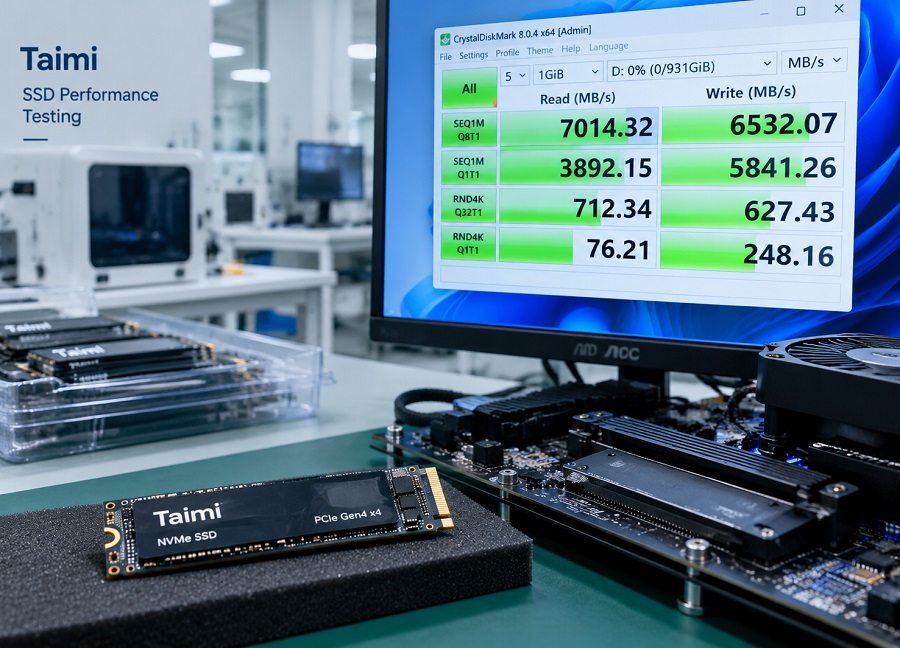
SSD quotations often highlight maximum sequential read and write speeds. These figures are useful, but they do not provide a complete picture of real-world performance.
Actual performance can vary depending on the host platform, test software, queue depth, workload, drive capacity, temperature, and amount of data written. Therefore, buyers should compare performance figures under similar testing conditions.
When reviewing benchmark data provided by suppliers, pay attention to the following metrics:
- Sequential read/write speeds: Measured in MB/s and useful for evaluating large-file transfers and other sequential workloads.
- Random 4K performance: Expressed in IOPS and relevant to operating systems, applications, and workloads involving many small files.
- Sustained write performance: Shows how the SSD performs during longer write operations, including after its SLC cache is exhausted.
- Thermal behavior: Helps evaluate whether performance changes under extended workloads or elevated operating temperatures.
- Endurance rating: Review TBW and other relevant specifications against the intended usage.
If one supplier reports peak performance from a fresh drive while another provides results from a longer workload, the figures may not be directly comparable.
Ask suppliers for relevant benchmark results and clarify the test platform, software, drive condition, and workload used. For a closer look at performance metrics, read our guide to SSD IOPS and how to compare real performance.
Why Sustained Write Speed Matters for Bulk Buyers
Many consumer SSDs use an SLC cache to improve short-term write performance. Once the cache is exhausted during a large file transfer, write speed may decrease depending on the NAND type, controller, firmware, and drive configuration.
For projects involving frequent large-file transfers or continuous data writing, buyers should pay attention to sustained write behavior rather than relying only on maximum advertised speeds.
Where sustained performance is important, request benchmark results from longer write workloads. Clarify the test conditions, including drive capacity, how much data has already been written, and whether the test was conducted on a fresh or partially filled drive.
4. Compare MOQ, Unit Prices, and Total Procurement Costs
Price is one of the most important parts of an SSD quotation, but the unit price should always be evaluated alongside order quantity and the full scope of supply.
SSD manufacturers and suppliers may offer different pricing tiers based on capacity, product configuration, order volume, customization, and component costs. A useful comparison should show exactly what is included in each quotation.
| Cost Component | What Buyers Should Verify |
|---|---|
| Unit price and volume tiers | Confirm unit pricing at the quantities relevant to your purchasing plan. |
| MOQ | Check minimum order quantities for each model, capacity, and custom configuration. |
| OEM and customization fees | Check additional costs for labels, packaging, firmware, or other customization requirements. |
| Packaging costs | Clarify whether standard packaging or customized retail packaging is included. |
| Freight and Incoterms | Confirm whether pricing is EXW, FOB, CIF, or another agreed delivery term. |
| Payment terms | Verify deposit requirements, balance payment timing, and accepted payment methods. |
For example, Supplier A may offer a lower unit price but require a larger MOQ. Supplier B may quote a slightly higher unit price while including customized packaging or a more flexible order quantity. The better option depends on your purchasing plan, inventory needs, and project requirements.
Buyers should calculate the total procurement cost rather than comparing the product price alone. Depending on the transaction, this may include product costs, packaging, freight, insurance, customs duties, and other applicable charges.
To understand the factors behind bulk SSD pricing in more detail, read our guide to SSD wholesale pricing and what affects bulk order costs.
5. Evaluate Manufacturing Quality Control and Testing Standards
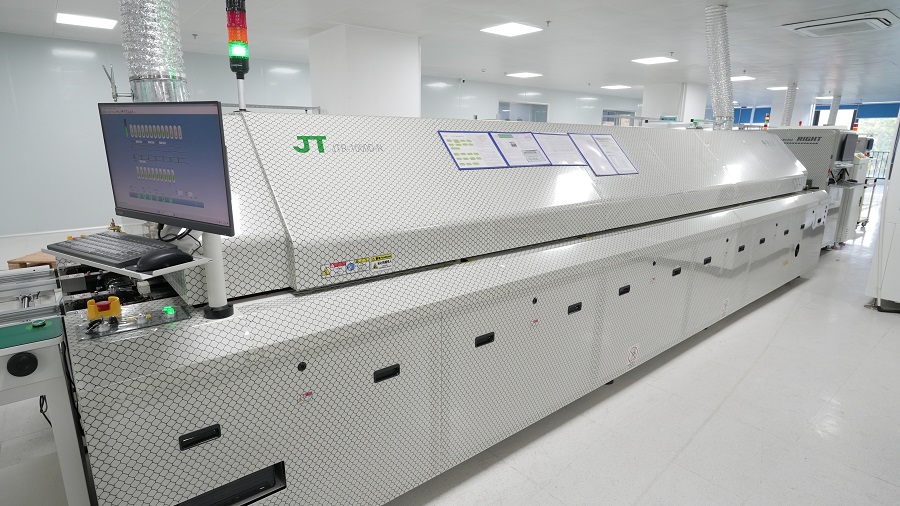
Two SSDs with similar specifications and prices may differ in their manufacturing processes and quality control procedures. For bulk buyers, understanding how a supplier manages production quality is an important part of supplier evaluation.
Ask the supplier to explain its quality control process and identify which checks are performed during production and before shipment.
| Quality Control Stage | Inspection Purpose |
|---|---|
| Incoming component inspection | Checks incoming materials and components against defined requirements. |
| SMT process inspection | Helps identify assembly and soldering defects during production. |
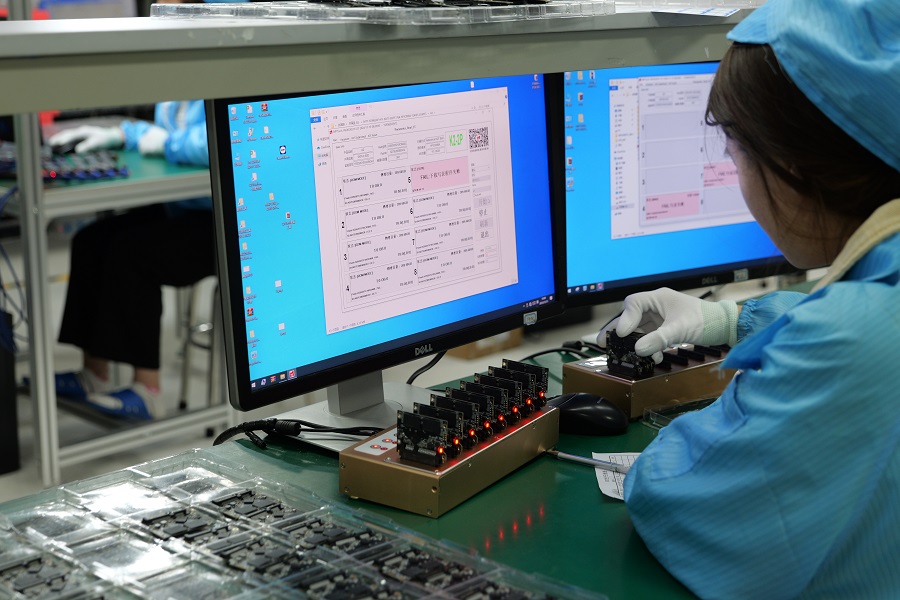
| Firmware programming and functional testing | Verifies drive recognition, initialization, and function against defined test criteria. |
| Performance testing | Checks relevant read/write performance and other product specifications. |
| Aging or burn-in testing | Can help identify certain early failures under defined test conditions. |
| Final inspection | Checks product appearance, labeling, packaging, and shipment requirements. |
Not every supplier uses the same inspection scope or testing criteria. Ask for the actual procedures relevant to the quoted product instead of relying on general statements such as "100% quality tested."
Useful questions include:
- Which components and production stages are inspected?
- What functional tests are performed before shipment?
- Are performance results recorded against defined specifications?
- Does the supplier perform aging or burn-in testing for the quoted model?
- Can the supplier provide relevant inspection records or test documentation?
For more information about SSD testing, read our guide to SSD burn-in testing and how manufacturers evaluate product reliability.
6. Review Warranty Terms and After-Sales Support
Warranty coverage is an important part of the total value of an SSD quotation, especially when purchasing products for resale, PC assembly, or OEM projects.
However, the warranty period alone does not provide a complete picture. Buyers should review the exact terms and understand how after-sales issues will be handled.
Before confirming an order, ask the supplier:
- How long is the warranty period for the quoted SSD model?
- Is warranty coverage subject to a TBW limit or other usage conditions?
- When does the warranty period begin?
- What information is required to submit a warranty claim?
- How are defective products evaluated and handled?
- Is there a defined RMA process for bulk orders?
- Can the supplier provide batch or serial number traceability where applicable?
- Who is responsible for shipping costs during warranty returns?
For distributors and OEM buyers, it is particularly important to understand the process for handling problems discovered after products have been delivered to customers.
Ask suppliers to provide written warranty and RMA terms. Make sure the agreed coverage, claim procedure, and responsibilities are documented rather than relying solely on verbal assurances.
7. Confirm Production Lead Time and Delivery Commitments
A competitive quotation is not useful if the supplier cannot deliver the required quantity within your purchasing schedule. Production lead time and shipping arrangements should therefore be confirmed before placing a bulk order.
Ask suppliers to clarify the following details:
- Sample validation lead time: How long it takes to prepare and deliver samples for evaluation.
- Mass production lead time: The expected production schedule after order confirmation and completion of required approvals.
- Raw material availability: Whether the required NAND, controllers, and other components are available for the planned order quantity.
- Production schedule: Whether the supplier can support the requested delivery date and order volume.
- Shipping arrangements: Which shipping method and Incoterms are included in the quotation.
- Split shipment support: Whether partial deliveries are possible if the order requires them.
For customized SSD projects, confirm the approval process for product specifications, labels, packaging, and firmware before production begins.
It is also good practice to document the agreed specifications, quantity, price, payment terms, and delivery schedule in the order confirmation. See our guide on what should be included in an SSD order confirmation.
SSD Supplier Quote Comparison Checklist
Use this checklist to compare quotations from different SSD suppliers. It helps ensure that important technical and commercial details are not overlooked.
| Evaluation Item | Supplier A | Supplier B | Supplier C |
|---|---|---|---|
| SSD model and capacity | Enter details | Enter details | Enter details |
| Interface and form factor | Enter details | Enter details | Enter details |
| NAND type and configuration | Enter details | Enter details | Enter details |
| Controller and DRAM/HMB | Enter details | Enter details | Enter details |
| Read/write performance | Enter details | Enter details | Enter details |
| MOQ and unit price | Enter details | Enter details | Enter details |
| Testing and quality control | Enter details | Enter details | Enter details |
| Warranty and RMA terms | Enter details | Enter details | Enter details |
| Lead time and shipping terms | Enter details | Enter details | Enter details |
| Total procurement cost | Enter details | Enter details | Enter details |
When comparing the completed checklist, first eliminate quotations that do not meet mandatory specifications. Then compare the remaining suppliers based on component transparency, quality control, warranty, delivery capability, and total procurement cost.
How to Choose the Right SSD Supplier for Your Bulk Order
Once you have compared the quotations, the next step is to decide which supplier is the best fit for your project. A practical evaluation should consider both the product and the supplier's ability to support repeat orders.
- Check specification compliance: Confirm that the proposed SSD meets your required capacity, form factor, interface, performance, and endurance specifications.
- Review component transparency: Ask suppliers to identify the NAND, controller, and firmware configuration, and explain how component changes are handled.
- Evaluate quality processes: Review actual inspection procedures, functional testing, and available quality documentation.
- Calculate the full cost: Include unit price, MOQ, customization, packaging, freight, insurance, and other applicable charges.
- Validate before mass production: Where appropriate, request samples and complete compatibility and performance testing before approving the order.
- Confirm long-term support: Review warranty terms, RMA procedures, communication, and the supplier's ability to support future orders.
If you are still evaluating potential manufacturing partners rather than comparing specific quotations, read our guide on how to evaluate an SSD supplier: a checklist for bulk buyers for additional supplier assessment criteria.
Working with Taimi for Bulk SSD Procurement
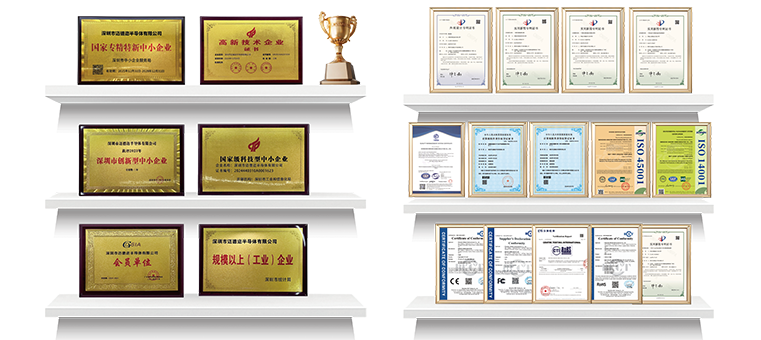
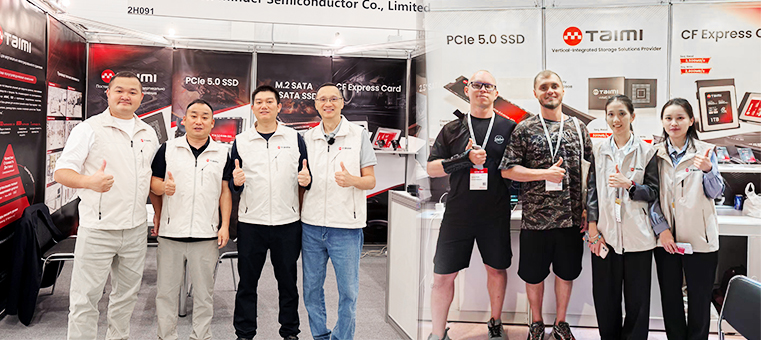
Taimi (Shenzhen Minder Semiconductor Co., Ltd.) focuses on the development and manufacturing of consumer-grade SSD products. We support PC builders, hardware distributors, and OEM customers with SSD solutions for different capacities, interfaces, and project requirements.
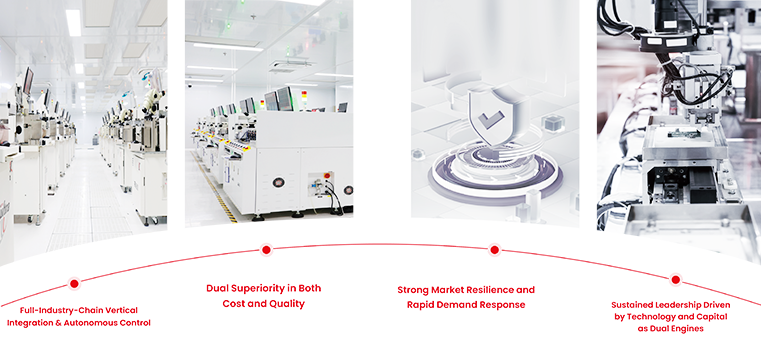
With a manufacturing facility of over 10,000 square meters and 8 automated SMT production lines, Taimi provides manufacturing capabilities for a range of consumer storage applications. Our team works with buyers to evaluate product specifications, component configurations, and customization requirements for bulk orders.
Explore our SSD product range to review available capacities, form factors, and technical configurations.
Looking for an SSD Manufacturing Partner for Your Next Project?
Share your required SSD specifications, target quantities, and customization requirements with Taimi. Our team can help you explore suitable consumer-grade SSD solutions for your distribution, PC building, or OEM projects.
Email: morffin@taimitech.com
Frequently Asked Questions
1. What should I compare when reviewing SSD supplier quotes?
Compare the complete SSD specifications, including capacity, form factor, interface, NAND type, controller, firmware, performance, MOQ, unit price, quality testing, warranty, and delivery terms. Make sure the quotations cover equivalent product configurations before comparing prices.
2. Why do SSD suppliers quote different prices for the same capacity?
SSDs with the same capacity may use different NAND flash, controllers, DRAM configurations, firmware, and testing procedures. MOQ, customization, packaging, payment terms, and shipping arrangements can also affect the final quotation.
3. Is the lowest SSD quotation always the best choice?
No. A low unit price may come with different component configurations, a higher MOQ, limited customization, or less comprehensive service terms. Buyers should compare technical specifications, quality requirements, warranty coverage, and total procurement costs before making a decision.
4. What information should I include in an SSD RFQ?
An SSD request for quotation should include capacity, form factor, interface, protocol, target performance, NAND requirements, order quantity, customization needs, packaging requirements, destination, and expected delivery schedule. Providing these details helps suppliers prepare more accurate and comparable quotations.
5. Should I request SSD samples before placing a bulk order?
Yes, when product compatibility, performance, or customization needs to be validated. Sample testing allows buyers to check the SSD on their intended hardware and review relevant performance and functional requirements before approving mass production.
6. What should I confirm before placing a bulk SSD order?
Confirm the approved product specifications, component configuration, quantity, unit price, MOQ, payment terms, production lead time, packaging, shipping terms, warranty, and RMA process. Make sure the agreed details are documented in the order confirmation before production begins.